Farmer-poet Wendell Berry’s environmental ethics were deeply rooted in his Christian faith and belief in caring for creation
Published in Science & Technology News

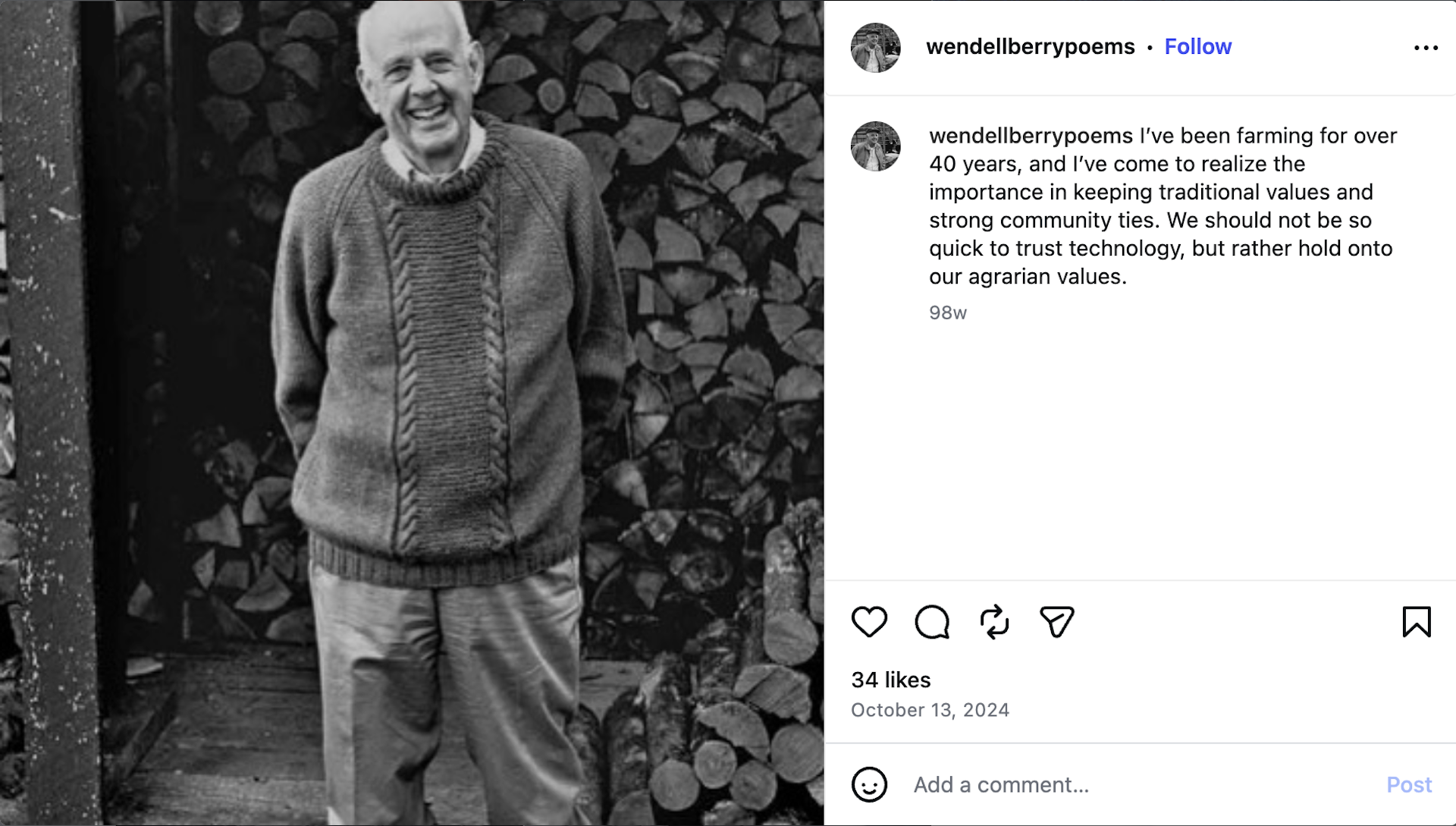
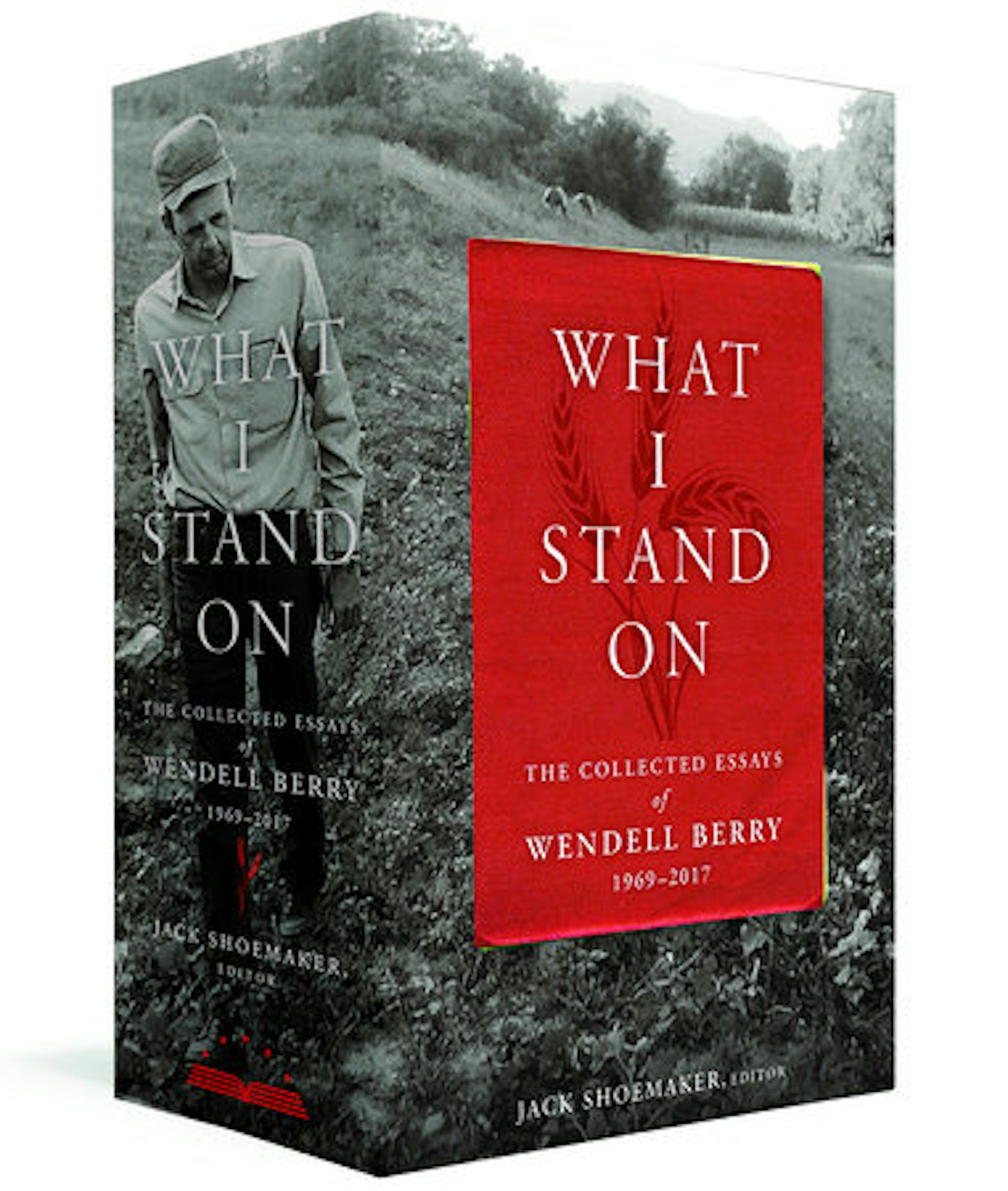




For most of his 92 years, Wendell Berry farmed his Lane’s Landing homestead in Henry County, Kentucky, using methods that embraced the land. He preferred draft horses to diesel-powered tractors and used crop rotation and manure fertilizer to naturally nurture his fields.
The widely revered poet-farmer, who wrote passionately about rural American life and humans’ responsibility to care for the land, believed in practicing what he preached.
Those beliefs were rooted firmly in his Christian Baptist faith.
Throughout his life, Berry, who died on Aug. 31, 2026, was a leading advocate of environmental stewardship. You might recognize his belief system in what’s known as creation care today.
It embraces a responsibility to care for the Earth and all its creatures. Berry increasingly saw that ethic violated by the industrialization of agriculture and ignored by a dominionist theology, preached by some prominent American Christians, which holds that humans have a God-given right to exploit the Earth’s resources.
Berry’s environmental ethics had their basis in Genesis, the first book of the Bible, which emphasizes that humans are not the owners of the Earth but rather are called to be caregivers and to tend the planet. He wrote, “We are allowed to make no exceptions – every person’s obligation toward creation is summed up in two words from Genesis 2:15: ‘Keep it.’”
In contrast, the dominionist view emphasizes Genesis 1:8, which has been interpreted by some to mean that humans are to subdue the Earth and to establish Christian dominance.
Berry opposed the idea that Christian scripture advocated for environmentally destructive practices such as mountaintop-removal coal mining, which led to the destruction of streams and forests in his native Kentucky. In 2011, he participated in a multiday sit-in protest of the mining practices, saying, “I intend to stay interested in it and involved as long as the Lord spares me.”
I am a scholar of American Christianity and have spent my career researching and writing about how Christians practice their beliefs.
I was in the audience when Berry was awarded the 2013 American Academy of Religion’s Martin Marty honor for the Public Understanding of Religion. For over an hour I listened raptly, as did the rest of the standing-room-only crowd, as he detailed his love for the land, community and his wife, Tanya.
I also taught students using his book “Jayber Crow,” about small-town living, religion and community, in my honors course at a small liberal arts college in the Midwest. I returned to his work when I was researching modern-day agriculture in Iowa for my book “Meatpacking America”.
I saw how Berry’s beliefs that humans have a responsibility to care for the Earth shaped his critiques about “agripower,” which he viewed as showing little regard for the fertility of the soil or the “health, wisdom, thrift, or stewardship of the farming community.” His poems, fiction and nonfiction often advocated for consuming less and living more communally.
Those beliefs rested on his commitment to caring for God’s creation.
Berry’s Christianity-infused agrarianism began in earnest in the 1970s and helped popularize family-run farms, organic farming and farm-to-table eating establishments.
The modern creation care movement began as part of a wider network of American social justice movements. It took shape in the 1980s and ’90s, especially among those Christian evangelicals who read the Book of Genesis as instructing humans to care about all of God’s creations. Today, creation care is a broad Christian movement that calls for environmental stewardship, repairing the harm that humans have done to the environment, and belief in a loving God who is responsible for the Earth’s creation.
As the religious studies scholar Laurel Kerns has written, the Christian environmental movement that began in the 1980s laid the theological groundwork for creation care. Today’s many chapters of creation care form part of a religious environmental movement that calls for Christians to embrace stewardship, creation spirituality and ecojustice.
As he detailed his 1977 text “The Unsettling of America,,” Berry was a fierce critic of agribusiness and American’s throwaway, consumeristic culture. He admired the Amish lifestyle, which forgoes modern conveniences for simple farm living focused on God and family. He wrote, “It is possible, I think, to say that this is a Christian agriculture, formed upon the understanding that it is sinful for people to misuse or destroy what they did not make. The Creation is a unique, irreplaceable gift, therefore to be used with humility, respect, and skill.”
Berry encouraged people, whether or not they identified as Christian or as religious, to question technology as the Amish do, to consider its impact on the environment as well as on human lives, and to develop the concept of “enough.” He wanted people to be more intentional and reflective in their thoughts, words and actions.
Throughout his poems and other writing, Berry beseeched readers to focus on what they actually need and not what they want or think they need. “The idea of ‘enough’ is alien to capitalism, which respects no limit,” he wrote.
Berry and his wife and collaborator for 69 years, Tanya Amyx Berry, built a way of life and advocated for a way of living that went against the grain of mainstream American and global culture.
In over 50 books and many poems and talks, Berry helped lay the theological, ethical and how-to groundwork for a creation care movement that spread around the world. He consistently called out the extractive, destructive human behaviors that have posed dangers for the planet’s future.
How his legacy will be fulfilled remains to be seen, but if the growing cross-generational public aversion to AI data centers and other forms of resource extraction are an indicator, it is my belief that Wendell Berry’s legacy will have a long and fruitful afterlife.
This article is republished from The Conversation, a nonprofit, independent news organization bringing you facts and trustworthy analysis to help you make sense of our complex world. It was written by: Kristy Nabhan-Warren, University of Iowa
Read more:
Regenerative agriculture can make farmers stewards of the land again
America’s dairy farms are disappearing, down 95% since the 1970s − milk price rules are one reason why
Healthy soil is the real key to feeding the world
Kristy Nabhan-Warren does not work for, consult, own shares in or receive funding from any company or organization that would benefit from this article, and has disclosed no relevant affiliations beyond their academic appointment.







Comments