Tesla wants to raise a pollution limit nearly 60-fold near a Fremont elementary school. Parents are fighting back
Published in Science & Technology News
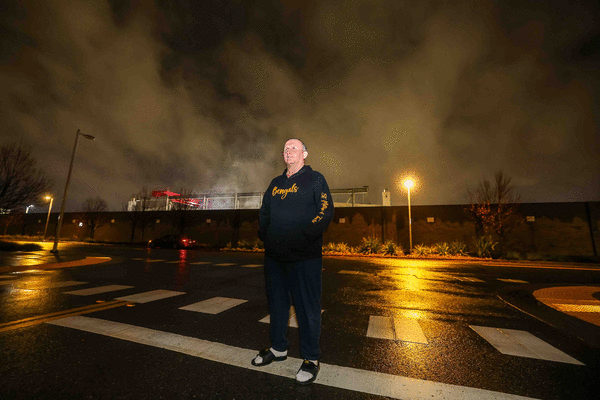
FREMONT, Calif. — Parents and neighbors of a Fremont elementary school are urging Bay Area air regulators to reject Tesla’s request to raise emissions limits for two aluminum-melting furnaces at its nearby factory.
The project is within 1,000 feet of Lila Bringhurst Elementary School, a public school with more than 1,100 students in kindergarten through fifth grade. The Bay Area Air Quality Management District has received more than 400 public comments, many opposing the request, and has yet to make a decision.
“Based on the volume of comments, we anticipate that this review will extend through the Thanksgiving holiday at least,” said Kristina Chu, communications manager for the Air District.
If Artem Boykov leaves his car parked outside his Fremont condo complex for longer than a few days, he said, it gets caked in a residue he suspects comes from the adjacent Tesla factory.
From his balcony, he said, he can often see what looks like fumes rising from the factory’s smokestacks at night. He worries about air pollution because his elementary school-aged son often plays outside in local parks.
“The concern is the pollution, also the noise,” Boykov told Bay Area News Group. “This is not good for (our) health.”
The bright lights and noise at the factory also force Boykov to close his windows facing the facility, which is surrounded by new high-density housing complexes built over the past several years.
Boykov said he hadn’t expected to deal with those issues when he bought his home in 2023. Tesla has operated at the site since 2010.
“It would be better for them to decrease emissions, not increase,” Boykov said. “We are not really happy with it.”
Tesla wants to raise the maximum allowable emissions of nitrogen oxides and revise limits on several other pollutants from the two furnaces, which melt aluminum for vehicle production, according to the Air District’s draft evaluation.
The annual manganese cap would rise from 1.41 pounds to 66.8 pounds, about 47 times the current limit, while the silica cap would climb from 15.5 pounds to 924 pounds, about 60 times the current limit. The district said some of the existing limits were based on levels below what testing equipment could reliably measure.
Chu said Tesla had originally accepted a “very low nitrogen oxide emissions limit” and later “found it difficult to actually meet the nitrogen oxide limit so they must install the emissions controls that they need to ensure compliance going forward.”
The new equipment is designed to control nitrogen oxides and particulate matter. The draft permit would require Tesla to test furnace emissions within 60 days of installing the filters and at least once a year after that. Chu said the equipment, testing and monitoring “will ensure that emission levels stay below the Air District’s stringent health-protective standards.”
In an earlier application for its existing filters, Tesla estimated it would need to bypass each filter for 110 hours a year for emergencies or maintenance. The draft evaluation says no metal melting would occur during those periods and that any particulate matter would come from burning natural gas. The draft would keep the existing particulate matter limits in place, including when filtration is bypassed.
The Air District’s draft assessment estimated a maximum cancer risk from the project of 1.4 in a million for a resident and 0.14 in a million for a student. Both are below the district’s threshold of 10 in a million. The district also found that estimated short- and long-term risks of other health effects were below its thresholds.
Cesunica Ivey, an air pollution expert and associate professor at UC Berkeley, said the school’s proximity gave her cause for concern. “Any non-zero emissions is cause for concern,” she said.
Ivey said it’s common for large manufacturing plants, such as Tesla’s Fremont facility, to produce emissions. But, she added, “we really have to be mindful of the continued over-industrialization of historically disenfranchised neighborhoods.”
“I’m not anti-jobs. I am pro-pollution-abatement nearby where people live, work and play,” Ivey said.
“With the profit margins we see for that company (and its) stock value, I think they can withstand to pay for the technology to make sure that their emissions levels stay the same.”
It’s unclear how much those pollution controls would cost Tesla. Tesla did not respond to Bay Area News Group’s request for comment.
The automaker has repeatedly run afoul of air quality rules at the Fremont factory. From 2024 through early November, the Air District issued 273 notices of violation to Tesla, including 92 this year, according to the district.
In 2024, the Air District’s hearing board ordered Tesla to address recurring air quality violations at the factory’s paint shops. At the time, the district had issued more than 100 notices of violation since 2019 related to those operations.
In 2021, Tesla reached a settlement with the Air District covering 33 notices of violation at the factory. In 2022, Tesla agreed to pay a $275,000 penalty in a separate U.S. Environmental Protection Agency settlement over Clean Air Act violations tied to vehicle coating operations.
In 2019, the company agreed to pay a $31,000 penalty over hazardous waste violations at the factory in another settlement with the EPA.
Krystal Chen and her husband live in a condo they bought near the school about five years ago.
She said neighbors have felt in the dark about Tesla’s request to raise its emissions limits. She told Bay Area News Group she heard about it through an online group chat with other neighbors.
Chen said she’s been especially concerned about air pollution and respiratory health since the pandemic.
“I totally agree with the people who are very concerned,” Chen said. “From my point of view, there is no reason to have the application be approved.”
Other parents at Lila Bringhurst organized a petition asking the Air District to reject Tesla’s request and do more to inform neighbors about the proposal.
The petition has drawn more than 4,300 signatures online. The Air District extended the public comment period to Nov. 13.
Fremont resident June Hu started the petition because she was concerned about her family’s health. She lives in the neighborhood and has a child attending the school.
“The reason why the petition went out was to really get clarity on what was going into the air,” Hu told Bay Area News Group.
“With this increase in emissions, the community doesn’t feel that the annual scale testing is really adequate.”
Jenny Lin, a neighbor who also has a child attending the school, signed the petition.
She said in an interview that “we’re not anti-Tesla.” The petition, Lin said, is “really making sure an emissions assessment right next to a school is clear and tested before the limits go up.”
Lin expressed concern with whether the Air District would approve Tesla’s proposal, and questioned whether the company’s filtration system would be effective at reducing environmental pollution.
“We actually don’t know what equipment they need,” Lin said.
“If it’s actually true that (Tesla wants) abatement equipment, why are certain toxins going up?”
©2026 MediaNews Group, Inc. Visit at mercurynews.com. Distributed by Tribune Content Agency, LLC.



Comments