Needed permitting reform or attack on bedrock environmental laws? What BAAJA would mean in Colorado
Published in Science & Technology News
DENVER — A massive bill that would change how the federal government considers environmental impacts when issuing permits for oil and gas drilling, mining and other industrial activity on public lands is being pushed through Congress amid criticism from environmentalists and Native Americans who say it would undo years of preservation and conservation work.
Advocates for the Bipartisan American Affordability and Jobs Act say it would speed the nation’s transition to renewable energy by cutting red tape and would strengthen the economy by allowing companies to more quickly expand production through faster permitting. But opponents called the bill a “Trojan horse” that would also undermine the nation’s bedrock environmental protection laws, lock in controversial oil and gas projects and limit judges’ ability to intervene in projects they find violate environmental law.
“It may help some renewable energy projects move forward, but it also accelerates mining, it accelerates drilling, it will accelerate building pipelines,” Ellie Andrews, climate solutions advocate at Environment Colorado, said Wednesday at a gathering of opponents of the bill in downtown Denver.
The Senate late Thursday night voted 62-33 to pass the bill — known as BAAJA — and it will now be heard in the House. Colorado’s two Democratic senators were split on the bill, which was first introduced Sept. 30. Senators from both parties sponsored the bill, but the final vote was largely along party lines. Sen. Michael Bennet voted against the bill while Sen. John Hickenlooper joined 15 other Democrats who voted in its favor.
The business sector, including the Colorado Oil and Gas Association, the American Petroleum Institute Colorado and the Denver Chamber of Commerce, supports the bill, saying projects now are stymied by lengthy reviews, duplicative processes, unpredictable timelines and litigation. All of that red tape causes projects to be more expensive, reduces investment and delays progress.
“It takes way too long and costs way too much to build anything in our country today,” said Lynn Granger, president of the Colorado Oil and Gas Association. “That’s hurting our competitiveness.”
Heidi McIntosh, managing attorney at Earthjustice’s Rocky Mountain office in Denver, criticized the speed with which a Republican majority is trying to push the bill through the legislative process before the balance of power shifts in January. The bill would roll back measures established decades ago to protect air, water, wildlife and public lands, she said.
“This is a hugely consequential bill and it would basically allow this administration to move forward with all kinds of permits for data centers, oil and gas drilling and mining. Any kind of permitting would be exempt from many federal laws,” McIntosh said. “You would have a two-year period where the Trump administration and industry will have a smash-and-grab for public resources.”
If there are problems with the permitting system, there are other ways to amend it without erasing decades of environmental law and progress, she said.
“The environmental community would be glad to work with Congress on it,” McIntosh said.
What does the bill do?
The nearly 500-page bill aims to speed permitting by making changes to a swath of environmental regulations, including the National Environmental Policy Act, the Clean Water Act, the National Historic Preservation Act and the Endangered Species Act. While each law is different, they all generally require studies of a project’s potential impact before it can move forward and they create processes for public input.
The changes would apply to all large infrastructure projects, including highways, oil and gas development, solar and wind farms, dams and transmission lines.
The bill is packed with changes, including:
—Require utilities to upgrade transmission lines and reduce the time needed to construct new transmission lines – changes proponents of the bill say are critical for advancing clean energy and lowering utility costs
—Require the Federal Energy Regulatory Commission to create rules so that data centers pay their own way and do not shift costs to other ratepayers
—Prevent federal agencies from canceling or changing project permits once they are issued
—Restricts courts from invalidating a project permit even when a judge finds it violated federal permitting law and requires judges to allow projects to move forward even while they are facing legal challenges or a judge finds they violated law
—Relax protections for wetlands and waterways and extend the amount of time an entity can take to fix water pollution from five to 10 years.
—Eliminate required tribal participation in determining how projects impact reservations and other sacred land
Now that the Senate has passed the bill, environmental groups and business interests will begin making their cases to House members.
Ean Tafoya, state programs director for GreenLatinos, said he had urged Hickenlooper to oppose the bill, but said the senator continued to argue that it will unlock clean energy in the United States. Now that fight turns toward Colorado’s delegation in the House.
“It’s a green-washing bill,” Tafoya said. “The deal is no good. What I told him is this is going to shackle us to more fossil fuel energy.”
Hickenlooper’s office declined an interview with The Denver Post but issued a statement reiterating his support after the bill passed Thursday night.
“Bipartisan bills like this are rare,” Hickenlooper said in the statement. “Where we’ve landed isn’t perfection. But it is progress toward delivering on our promise to bring down prices, hold Big Tech accountable, and stop the Trump administration’s attacks on clean energy. Our work with Tribal Nations and environmental groups doesn’t end with today’s vote. We’ll keep pushing to address their concerns.”
How would it impact the energy sector?
Kevin Rennert, a fellow and director of the energy infrastructure advancement program at Resources for the Future, said the bill would make it easier to build transmission lines and energy infrastructure, which would in turn boost renewable energy.
He offered the theoretical example of a wind farm producing electricity and how a more robust, long-distance grid would push that electricity to cities that otherwise would not have access.
In the long run, that would improve reliability and encourage more renewable energy production, he said.
“You get more clean energy online sooner than if you don’t have the policy,” he said.
Rennert’s nonprofit analyzes the economic impact of energy policies through a model created at the National Laboratory of the Rockies in Golden.
“One way to think about this bill is that it’s really a down payment on future climate policy,” Rennert said. “All of the analyses show a future with far lower emissions than there are today with an expanded transmission grid.”
How would it impact Colorado’s water and public land?
The bill would make it more difficult to halt or undo development on the 24 million acres of federal public land in Colorado.
The Bureau of Land Management in June held the largest oil and gas lease sale in Colorado in more than a decade, and more large-scale leases are planned, according to a letter sent to the state’s congressional delegation by 29 Colorado organizations opposing the bill.
“In short, BAAJA could decimate the protection of Colorado’s cherished and irreplaceable public lands and leave Tribal nations and the public with no way to stop the damage,” according to the letter written by the coalition, which includes the Center for Biological Diversity, the Colorado Mountain Club, Defenders of Wildlife, the Endangered Species Coalition and Wilderness Workshop.
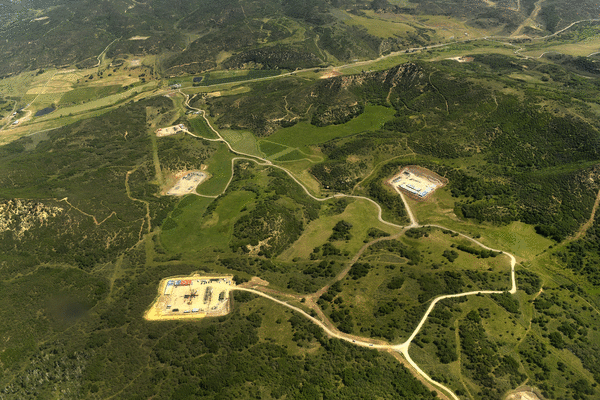
Environmental groups point to the Roan Plateau outside of Rifle as a prime example of a site that could be impacted by BAAJA.
In 2014, conservationists, the Bureau of Land Management and an oil and gas company agreed on a settlement that protected the top of the plateau from drilling and development. The settlement followed years of protest and litigation after the agency in 2008 auctioned off lease parcels on the plateau, which offers critical habitat for large deer and elk herds and pristine streams where rare native trout spawn.
But this December, the BLM plans to again offer 4,600 acres on top of the plateau for leases that will last at least 10 years. If passed, BAAJA would make it nearly impossible to reverse those leases or change their conditions, said Taylor Luneau, Colorado conservation manager at The Wilderness Society.
BAAJA also makes changes to the Clean Water Act, but legislation Colorado lawmakers passed in 2024 would render those changes moot, said Stu Gillespie, a Denver-based staff attorney at Earthjustice who worked on the Colorado law.
The Colorado law followed a U.S. Supreme Court decision that weakened the scope of the Clean Water Act. Now, it serves as a pre-emptive defense to further changes, he said.
“We don’t have to follow Congress off the cliff,” Gillespie said.
How would it impact tribal lands?
In 2021, Xcel Energy chose a route for its new Colorado Power Pathway transmission project that would have placed towers and electrical lines close to the Sand Creek Massacre National Historic Site.
The tribes, whose ancestors were killed in the November 1864 massacre, objected, said Norma Gourneau, a Sand Creek Massacre Foundation board member and member of the Northern Cheyenne tribe in Montana.
The foundation, along with members of the Northern Cheyenne, Northern Arapaho and Southern Cheyenne and Arapaho tribes were able to meet with Xcel executives and convince them to move their towers, she said.
Under the BAAJA, there would not be an obligation for Xcel or another utility company to do so, Gourneau said.
“It wasn’t even that far for them to move those so we could protect Sand Creek,” Gourneau said. “But that was something we had to fight for.
“We just want a seat at the table and to be able to participate in this dialogue. That’s why we are fighting so hard to keep those provisions. Leave them alone.”
An amendment added in the Senate that would have kept those tribal protections intact failed, much to the disappointment of Colorado’s tribal leaders, said Ernest House Jr., director for the Center for Tribal and Indigenous Engagement at the Keystone Policy Center.
Colorado’s two federally recognized tribes and the 50 historic tribes have developed a good working relationship on various projects such as agreeing on locations for wildlife overpasses, which allow elk and other animals to safely migrate across busy highways.
“It’s important for the Colorado delegation to know where our tribes stand,” House said. “It’s not just what people see as cultural Native American concerns, but also it’s impacts issues like clean water and wildfires.”
How would it impact historic preservation?
The bill also makes broader changes to the National Historic Preservation Act, which requires evaluation of potential historic value in an area where a project is proposed. The changes limits public comment opportunities and narrows what kind of projects must perform a review under the law.
But the law is not the bottleneck that halts or slows down projects, said Jay Homstad, senior director of preservation advocacy at Historic Denver. Nearly all reviews under the law find no harm to historic places and are completed in about two weeks, he said. Instead, staffing shortages at federal agencies and delayed project consultation are the bottlenecks in the approval system, he said.
“The Senate permitting bill fixes none of that,” he said. “Instead, it just removes the public from the room.”
How would it impact the oil and gas industry?
Colorado’s Western Slope is rich in natural resources, including a deposit of about 200 years worth of natural gas, Granger said.
That natural gas is in demand as artificial intelligence grows and more data centers are needed to power it, she said.
“Colorado has a unique opportunity and we would love to see those natural resources being produced that could help our state but also help our nation,” she said.
Oil and gas businesses are ready to invest in Colorado, which would add jobs and tax revenue to the state, Granger said.
A letter written in support of the bill by the American Petroleum Institute and signed by four Colorado business groups, including the Denver Chamber echoed that statement.
“Businesses are prepared to invest billions of dollars in projects across the country, but investment requires predictable permitting timelines and confidence that final agency decisions will withstand judicial review,” the letter said. “A more efficient and durable permitting system can enable resources to move from production regions to homes, businesses, manufacturers, and global markets more reliably and efficiently, helping meet demand and affordability.”
©2026 MediaNews Group, Inc. Visit at denverpost.com. Distributed by Tribune Content Agency, LLC.






Comments