Editorial: Medicaid fraud is a problem. But so is a lack of understanding about the program
Published in Op Eds
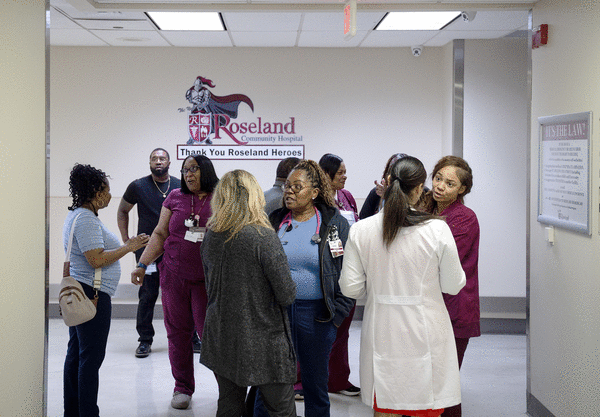
Medicaid is a federal program jointly funded with the states, providing health and long-term care insurance to more than 80 million low-income Americans.
And if you didn’t know all of that, you’re not alone.
The government has spent a fortune over the years de-emphasizing the term “Medicaid,” instead promoting other names that carry less of a stigma. The idea has been to encourage eligible Americans to sign up for benefits they otherwise might reject out of confusion, pride or political philosophy.
Marketing efforts have succeeded in disguising Medicaid, assisting states across the country in rebranding at least part of their public health-insurance programs. HealthChoice Illinois, for instance, is funded by Medicaid. Same goes for BadgerCare in Wisconsin, SoonerCare in Oklahoma, Apple Health in Washington state and so on.
Making things even more confusing, most states use private insurers such as Aetna or UnitedHealth to help administer their Medicaid programs. Millions of people who get health care paid for by Medicaid don’t see “Medicaid” displayed prominently on their insurance cards or billing documents.
As a result, many Americans just don’t realize they’re on Medicaid — and that hasn’t mattered much until now. But the confusion becomes a serious problem when staying insured depends on navigating new rules, paperwork and deadlines.
Folks can hardly be blamed for assuming they have private health insurance, or, conversely, believing they’re uninsured. In some cases, they disparage a program they depend on for themselves, their children, grandparents, neighbors and loved ones.
A recent public radio story spotlighted a patient advocate in Kentucky who was yelled at during a health fair when she explained that a man’s parents were indeed on Medicaid. “He started screaming about no one in his family was ever using Medicaid: That’s for poor people. That’s not for us.” In fact, 1 in 3 Kentucky residents depend on Medicaid.
Under the One Big Beautiful Bill Act that President Donald Trump signed into law in July, Medicaid is set for a long-awaited tightening. The concern is not that eligibility standards are being revisited, but that the law relies heavily on new work and reporting requirements that could reduce participation through administrative complexity rather than clear policy choices.
For starters, the bill bars the use of rules approved during the Joe Biden era that would have streamlined the program by removing barriers, simplifying documentation and automatically enrolling people who already qualify for related government benefits. The Biden initiative also improved payment systems and helped ensure access to care.
Those rules are out. Instead, GOP lawmakers have added new work and reporting requirements and increased the pace of eligibility determinations. Supporters claim the additional administrative burden is worth it to reduce fraud and abuse.
We are all for better firewalls against that fraud and abuse. On Thursday, a federal prosecutor suggested that the total amount of recent Medicaid fraud in Minnesota could top $9 billion. That’s a staggering amount, reportedly perpetrated across 14 different Medicaid services. Guilty pleas in Minnesota already have been forthcoming. That’s enough to tell us that Medicaid needs reform at both the federal and state levels. Especially in Minnesota.
We also don’t believe that spending should go unchecked.
But if lawmakers believe Medicaid is too large, they should narrow eligibility openly, not rely on bureaucratic obstacles that push eligible people out by accident.
The Congressional Budget Office estimates the new law will cut Medicaid spending by more than $900 billion over the next decade, while increasing the ranks of uninsured by at least 10 million, and potentially many more. States receiving reduced federal funding will likely cut services.
Some of the biggest changes will go into effect after the midterm elections in November. The deadline for states to impose new work requirements and boost the frequency of Medicaid redetermination kicks in as of Jan. 1, 2027.
So, as it stands, the end of next year will be a busy time for separating low-income Americans from their health insurance. And that’s a problem, separate to our minds from the fraud issue.
Medicaid has expanded dramatically since the pandemic, and we firmly believe that abuse must be stamped out and costs kept under control. Spending cuts should be made in an aboveboard way, however, not by tripping up Americans with bureaucratic landmines.
___
©2025 Chicago Tribune. Visit at chicagotribune.com. Distributed by Tribune Content Agency, LLC.





























Comments