Commentary: AI can't do soul-searching. Here's why we need philosophy
Published in Op Eds
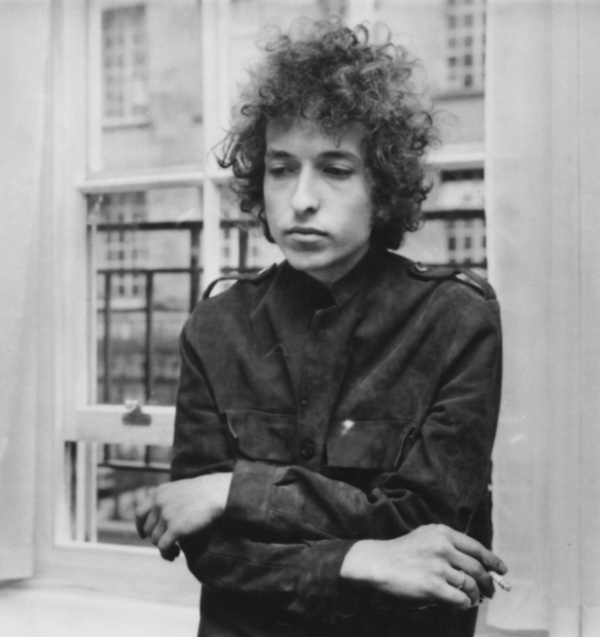
As Bob Dylan once said: “The times, they are a-changin’.”
One only need to look to the emergence of artificial intelligence to know the lyrics from this 1964 song continue to ring true today. But for all its strengths — from offering travel tips to investment advice to writing term papers and poetry — AI content is also a double-edged sword, littered with bogus references and conclusions based on biased studies or incomplete information.
And AI comes with a price to pay. For many people, that price will be measured in dollars and cents, as AI takes over jobs that used to belong to human beings. Why pay someone to write a report or plan a budget if AI can do it by pushing a button? Even if someone’s job is not taken over, AI may require them to undergo significant retraining to keep it.
But there is another price to pay, which cannot be measured in dollars and cents: the cost of intellectual stagnation. At its best, AI reflects the current thinking on a particular issue. That may be a good starting point. But what if the current thinking is wrong? What if we need a whole new way of looking at things? Where will new ideas come from?
Unless there are people willing to challenge the current thinking, the price we pay is intellectual stagnation.
Consider the kinds of questions that go beyond the retrieval of information or the completion of technical tasks, the hard questions that many of us face from time to time. Does God exist? Are some actions unforgivable? If someone you love committed a serious crime, would you turn them into the police? Should terminally ill patients be allowed to take their own lives? Here AI is of limited value. There is no way to tackle these questions without deep reflection and a great deal of soul-searching.
In the face of growing conformity, critical thinking skills are needed more than ever. According to a study, released last year, by the Journal of the American Philosophical Association that looked at 600,000 college students, those who majored in philosophy not only ranked higher than all others on verbal and logical reasoning, but also displayed more open-mindedness and intellectual curiosity. There is even evidence that philosophy majors have a higher acceptance rate to medical school than students who major in traditional subjects such as chemistry or biology.
While some may be surprised by these results, I am not. Standardized tests don’t just measure a student’s recall of facts; they also try to determine whether students can analyze arguments and are sensitive to verbal nuances. Because they are trained to question basic assumptions, define key terms and construct logical arguments on their own, philosophy majors often have an advantage over others.
When I taught basic classes in philosophy, for example, I made sure that for every thinker we read arguing for one position, we read an equally important thinker arguing for the opposite: an atheist and a believer, a materialist and an idealist, a defender of morality and a critic of it. Papers and exams were structured so that students had to analyze arguments both for and against a particular position and decide which side is right. In addition to the ability to analyze arguments, I hoped to instill a willingness to consider unconventional approaches to problems.
So while intellectual stagnation may not have an immediate effect on one’s pocketbook, it is a serious problem at a time when people have become so entrenched in their political views that they no longer listen to people who do not share them — in other words, a time when simple slogans and dogmatic pronouncements have become all too common. In this case, the price we pay is a deterioration in public discourse and a corresponding rise in prejudice and misunderstanding.
I am not arguing, of course, that philosophy has a monopoly on critical thinking. It often borrows insights from other subjects. It rarely produces established results in the way the sciences do, and other majors in the liberal arts also encourage creative thinking.
But if the recent study of college students is accurate, philosophy, though not a panacea, does an especially good job of preparing them for the AI age we are entering.
____
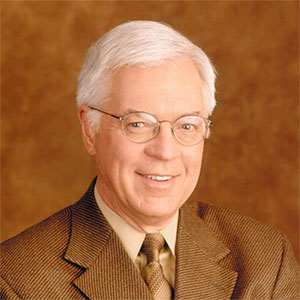
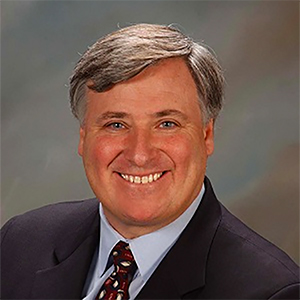
Kenneth Seeskin is professor emeritus of philosophy and the Philip M. and Ethel Klutznick professor of Jewish civilization at Northwestern University.
___
©2026 Chicago Tribune. Visit at chicagotribune.com. Distributed by Tribune Content Agency, LLC.

















Comments