Commentary: Landmark education law deserves protection
Published in Op Eds

The Trump administration recently announced its plan to move oversight of Title I, the federal program serving roughly 26 million children living in poverty, from the U.S. Department of Education to the Department of Labor. The change has drawn little public attention, but its consequences could be far-reaching for families and schools across the country.
Title I is not a niche program. It is the largest federal investment in K-12 education for children living in poverty, multilingual learners, migrant students and students with disabilities. It helps schools pay for reading support, after-school programs, bilingual instruction, counselors and other services that make school possible for students facing hardship. Shifting this program to an agency built for workforce policy, not education, risks weakening the very supports Title I was designed to provide.
We come to this issue from both professional and personal experience, as brothers and former teachers. One of us (John) is a professor of education who studies equity and teacher preparation; the other (Matt) is an investigative journalist who has reported on public institutions and accountability. Together, we grew up in a low-income, single-parent household and attended thirteen public schools across urban, rural and suburban communities. For us, Title I was often the difference between falling behind and staying afloat.
The program worked because it is administered by the Department of Education and governed by complex equity safeguards written into federal law, rules that require deep expertise in education finance, accountability and civil-rights enforcement. Education officials have the knowledge and skills to support early literacy, serve multilingual learners, monitor civil-rights protections and ensure districts use federal funds as intended.
In contrast, while the Labor Department plays a vital role in protecting workers and administering job-training programs, it is not designed to work in collaboration with K-12 schools.
Proponents of the move, which is part of a larger plan to eliminate the Department of Education, argue that aligning education more closely with workforce needs will make schools more “relevant.” But this framing misunderstands the purpose of public schools. Schools prepare young people for work matters, but they also teach children to read, to think critically, to participate in civic life and to develop socially and emotionally. Those foundations need to be built long before students enter the labor market.
Congress, in creating Title I in 1965 as part of President Lyndon Johnson’s War on Poverty, assigned its administration to the Department of Education, recognizing that poverty, not ability, was limiting educational opportunity for millions of children.
For students including ourselves, this decision was not abstract. When families move frequently or struggle to make ends meet, school can be the one stable institution in a child’s life. Title I funded reading teachers when we needed extra help, after-school programs when our mother was working, school meals when money was tight and even access to the school band when the cost of instruments was out of reach. Those supports did not turn school into job training; they made learning possible.
What can readers do? Start by asking your members of Congress whether they support moving Title I out of the Department of Education. Urge them to hold hearings, review the legality of the transfer and ensure that programs created by Congress remain where Congress intended.
State leaders can also speak up, making clear that schools depend on educational expertise, not bureaucratic reshuffling. Parents, educators and community members can raise questions at school board meetings and with local representatives about how this change could affect students.
Title I was created because poverty should not determine a child’s future. Preserving that commitment requires more than good intentions. It requires oversight, expertise and accountability. Those are best provided by an education agency focused on children, not by an agency built for the labor market.
_____
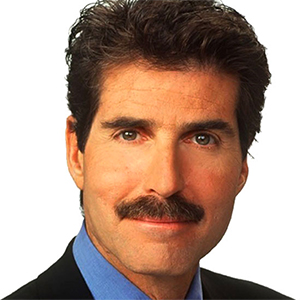
John Pascarella is a professor of clinical education at the University of Southern California’s Rossier School of Education and chief academic officer of the USC Race and Equity Center. Matt Pascarella is an investigative journalist and producer whose reporting and documentaries have appeared in numerous outlets. This column was produced for Progressive Perspectives, a project of The Progressive magazine, and distributed by Tribune News Service.
_____
©2026 Tribune Content Agency, LLC.
















































Comments