Commentary: Colleges aren't liberal-making factories. At least not where I taught
Published in Op Eds

Open a newspaper or scan an opinion section, and you’ll likely encounter a familiar storyline: American universities have become ideological factories, churning out graduates stamped with a single political worldview. Students are portrayed as disengaged, fragile, glued to screens and uninterested in real work or real relationships.
That narrative may fit some campuses. It does not describe my experience teaching a speech course this year at Roosevelt University in Chicago — the first college class I’ve ever taught. I’m an adjunct instructor, and my primary career is running a small business outside of academia.
Roosevelt is labeled a “university,” but that label deserves scrutiny. It conjures images of leafy quads, students with trust funds and ideological monoculture. Roosevelt is something else entirely: a city college. Many of my students are commuters, more than half of them work part-time jobs and some work full time. They juggle school, family obligations and rent. Politics, for most of them, barely register.
Over an entire semester, I did not encounter political messaging in the classroom, in faculty meetings or in administrative directives. No one told me what to believe. No one told me what to teach politically. I wasn’t nudged, pressured or “educated” toward a particular ideology. I taught public speaking — how to organize thoughts, tell stories, persuade and listen.
That matters, because the depiction of universities, bordering on caricature, as indoctrination hubs assumes students are passive recipients of ideology. My students are not passive about much of anything. They’re pragmatic. They’re busy. And they’re far more concerned with paying bills and figuring out their future than debating national politics.
Which brings me to the second misconception — about Gen Z students.
We’re told they can’t communicate, can’t focus, can’t hold conversations and prefer video games and social media to human interaction. What I saw was something more nuanced — and more hopeful.
Yes, this is a COVID-19-era cohort. Some need help understanding that conversations with professors, supervisors or older adults aren’t confrontational by default. There’s a hesitancy there. But it’s not apathy. It’s uncertainty. And it’s fixable.
What struck me most is that these students want relationships. Real ones. Not through Instagram. Not through group chats. They want mentorship, guidance and connection. They just don’t always know how to initiate it yet.
During one session as Thanksgiving approached, we turned the room into a potluck — pizza and sushi. Each student gave a short speech about what they were grateful for in 2025. It became one of those rare afternoons you don’t forget. Laughter. Some tears. Stories that made the setting feel more like a family dinner than a lecture hall.
Several students tried sushi for the first time. Two had never experienced a Thanksgiving at all, so this was their introduction.
Earlier in the semester, my students spoke about what they’re passionate about: travel, barbering, architecture, cooking, cheerleading, culture, entrepreneurship, music, art, creativity — and yes, the musical artist Drake. None of it had much to do with social media or screens.
These students aren’t obsessed with the political circus. They’re focused on becoming competent adults.
I didn’t just teach speechmaking. We talked about interviewing skills, LinkedIn profiles, and how to shake a hand and write a handwritten note. We talked about Roth IRAs and compounding interest. We talked about reading real publications, such as The Economist, not TikTok summaries. And occasionally, we talked about Led Zeppelin.
If universities truly were ideological factories, this kind of practical, human, apolitical education would be impossible. It wasn’t just possible — it was welcomed.
None of this is to deny that ideological excess exists in higher education. It does. But sweeping generalizations flatten reality and do a disservice to institutions such as Roosevelt — and students such as mine.
The real story isn’t that many colleges are radicalizing students. It’s that many students are quietly working, learning and trying to build lives in a noisy world that keeps misunderstanding them.
And if that story doesn’t fit the headline, maybe the headline needs updating.
____
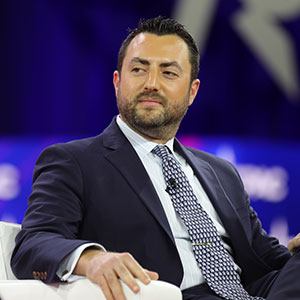
Ryan Gable is founder and CEO StartingPoint Realty Inc. and an adjunct instructor at Roosevelt University in Chicago.
___
©2026 Chicago Tribune. Visit at chicagotribune.com. Distributed by Tribune Content Agency, LLC.


























Comments