Editorial: Illinois' youngest victims deserve more than silence
Published in Op Eds
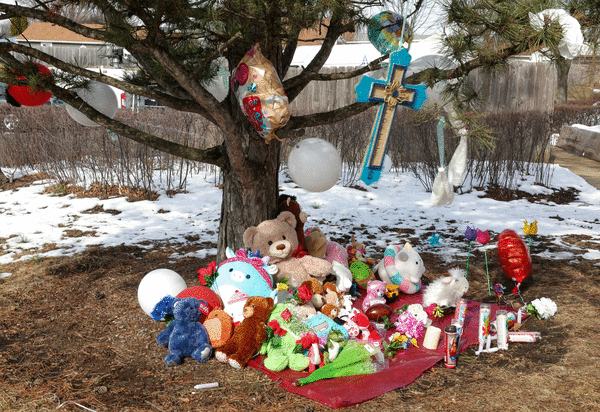
We’re a society obsessed with kids — how best to educate them, when to introduce technology into their lives, how they eat, sleep and dress. Many of our elected officials are encouraging us to have more of them.
We must also be willing to confront the violence that some of Illinois’ youngest children face.
A data-driven analysis from Northwestern University released late last month examined 121 incidents between 2015 and 2022 in which children under age 10 died from violent force inflicted by a caregiver. It tells a very specific story about violent deaths of young children that investigators classified as fatal abuse.
Namely, that this is overwhelmingly a very young child problem.
Children aged three and under accounted for 60% of deaths in the report.
Let that sink in: Toddlers.
This report is a grim read. The nature of these deaths is cruel and brutal, often “hands-on” violence, not rare freak events. Blunt force injuries account for nearly half of fatalities, meaning a person beat a young child to death. Other times, deaths include multiple injuries, gunshot wounds, suffocation, burns or shaking.
Where circumstances were documented, crying and fussiness was the most commonly reported situation preceding the fatal injury. In other words, completely normal developmental behavior triggered lethal violence.
We wanted to look for patterns to help diagnose the problem, and they’re certainly there. Geography and poverty matter. Fatalities were concentrated in higher-poverty census tracts but they occurred across income levels and in communities throughout the state. This is not a problem confined to any single ZIP code. What we take from this information is that child protection policies should target high-poverty concentrations and also avoid assuming “this can’t happen here.”
One of the most frightening things we read was that most of these victims weren’t “known to the system” beforehand. Just 8.3% had a prior Child Protective Services report before the fatal incident. When the relationship was known, the suspect was most often a biological parent. In other cases, it was a mother’s boyfriend, a babysitter or a step-parent. These crimes unfolded inside the child’s closest circle, not at the hands of strangers.
What does this mean?
It means we can’t hope a bureaucratic system will fix this, for starters. It also suggests how isolated some families become. When parents are overwhelmed and children are hidden from view, warning signs are easier to miss.
Keeping in mind that the system only knew about a fraction of these cases beforehand, beefing up investigations alone won’t fix the problem.
These deaths are rarely preceded by a thick paper trail. They often emerge at the intersection of fragile children and overwhelmed adults.
Policy can reduce risk, especially in the earliest years of life, but it cannot replace watchful adults. A good start would be universal hospital-based education on coping with crying and safe soothing, along with routine pediatric screening for caregiver stress and domestic instability. And, frankly, we need to do a better job with mothers, postpartum. Too many mothers still experience a postpartum model that consists of discharge, a six-week visit and little else. When we know that crying and fussiness often precede fatal injuries, leaving exhausted parents largely on their own in those early weeks is a gap Illinois should confront.
Still, the heaviest lifting must come from those in a child’s inner circles.
Check on the new parents in your life. Bring food. Offer an hour of child care. Ask how they’re really doing. And if you see signs a child isn’t thriving, such as unexplained injuries, extreme withdrawal or chronic distress, don’t ignore them.
Support the parents, but err on the side of the child. Paying attention is an act of protection.
___
©2026 Chicago Tribune. Visit at chicagotribune.com. Distributed by Tribune Content Agency, LLC.





















































Comments