Commentary: University presidents face a 'Star Trek'-like Kobayashi Maru moment
Published in Op Eds

Should university presidents publicly weigh in on the most pressing societal issues of our times? In some academic circles, especially at public universities, it is now common for presidents to adopt a policy of neutrality. For presidents of faith-based universities, taking a position of neutrality can be problematic since the religious order that sponsors your institution believes that attacks on human dignity are not political matters but rather moral ones.
In the fictional world of “Star Trek,” all Starfleet Academy cadets must participate in a command simulation called Kobayashi Maru, named for a civilian space freighter that sends a distress call to a Starfleet ship. The situation is hardwired to be unwinnable. The test is not a measurement of the cadet’s ability to command a starship but rather a psychological exam to see how the cadet handles a moral dilemma.
Higher education leaders in America are currently facing their own Kobayashi Maru moment — defend social justice on their campus or openly criticize the actions of the federal government and put the federal funding vital to their students and the institutions they serve at risk. Alternatively, they could choose to remain silent and avoid the wrath of the federal administration, but then risk losing their moral authority.
As president of a Catholic university, I understand the church’s teachings on such matters as racism and antisemitism, and its stance on violence against immigrants and refugees is clear. Not only does the church condemn these acts, but it also states that silence in the face of injustice is complicity.
The Catholic Church is not alone. Several other faith communities have spoken out on recent immigration crackdowns and the increase in racist tropes and hate crimes against marginalized groups across our country.
The question is: With so many faith communities speaking out against injustice, how can we explain the current silence from college presidents? One could argue that silence is understandable given the certain retribution that would follow.
As “Star Trek” storytelling reveals, Starfleet commander Capt. James T. Kirk decides he cannot accept the no-win situation of the Kobayashi Maru. He breaks into the simulation and rewrites the program so that it is possible to win.
So, how should faith-based higher education leaders proceed? Perhaps we should follow the lead of Kirk and not accept this. We could reprogram our situation by collectively speaking out and working together to refocus on the public good, which has been the hallmark of faith-based higher education for centuries.
There are plenty of examples in history when faith-based institutions took the moral high ground and served as catalysts for debate that stimulated action on the compelling issues of the times. From the anti-slavery campaigns and the Civil Rights Movement, to condemning the death penalty and protecting the environment, faith-based institutions have been leaders on addressing issues that are at the core of a healthy society, support our democracy and promote the public good.
How do we reprogram higher education? We can begin with our local communities. The late U.S. House Speaker Tip O’Neill Jr. used to say that “all politics are local.” Unfortunately, so many of us have focused on being global institutions we have forgotten to first be a good neighbor.
We need to win back the support of our local communities, and we can accomplish this by doing what we do best. We can host open public forums to discuss critical issues and invite local community members. We can organize voter registration drives. We can also encourage members of our campus community to show up for those who are marginalized in society and accompany those in need. We can advocate for those populations in our own neighborhoods and use our expertise to seek justice by creating clinics that provide services and advice to local citizens. These actions speak louder than words, but on occasion, university presidents must also speak out.
As presidents of faith-based colleges and universities, we must band together so that if one is attacked for taking a moral stand based on a faith tradition, we all will publicly support their right to do so.
If we need an example of a faith-based leader who faced their own Kobayashi Maru moment, then we only need to remember the late Rev. Theodore Hesburgh of Notre Dame.
When Hesburgh was approached by President Dwight Eisenhower to lead the Federal Civil Rights Commission, he knew he would upset some elected officials, alumni and donors if he supported the Civil Rights Movement. If he turned down the offer to lead, he would lose his moral authority as a leader. Thankfully, he accepted the challenge.
I cannot imagine a university president in America who would not publicly condemn an attack on human dignity or an act of racism on their own campus. So, why wouldn’t we also speak out collectively when we see such injustice in our country?
College students need role models, and we must lead by example. As leaders of faith-based institutions, let’s embrace our own Kobayashi Maru moment by encouraging public debate on our campuses, becoming more engaged in our local communities and personally standing up for human dignity.
____
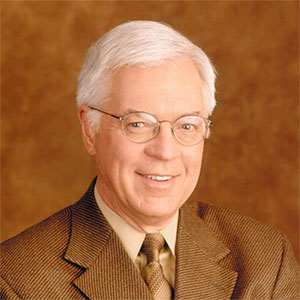
James T. Harris III is president of the University of San Diego.
___
©2026 Chicago Tribune. Visit at chicagotribune.com. Distributed by Tribune Content Agency, LLC.


















Comments