Commentary: Sacred restraint in a restless world
Published in Op Eds
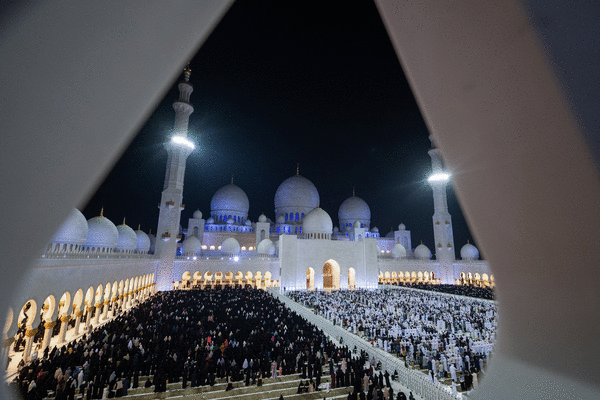
Across the globe, Muslims, Christians, and Jews enter seasons of fasting, repentance, and remembrance. Together, the Abrahamic traditions represent over half of the world’s religious population. In their distinct ways, each tradition calls its followers to humility and a deep concern for others, whether through fasting, repentance or remembrance of past liberation. Yet as sanctuaries fill with prayer and discipline, the world outside keeps its relentless pace, marked by tension and turmoil. While some seek peace in their houses of worship, violence and uncertainty threaten to spill over borders, and leaders reach for the language of destruction rather than patience.
We see this tension most clearly in the confrontation between Iran, the U.S. and Israel. Rhetoric escalates, proxy forces assemble, and the world feels perched on an edge, even as sacred rituals urge restraint. Here at home, we are not immune. Our political life is stuck in a loop of grievance and suspicion, with election seasons deepening division rather than renewing community. The public square, rather than inviting repentance or reflection, amplifies anger and spectacle, while violent language becomes commonplace, numbing us to the cost of conflict.
What does it mean to practice restraint amid these troubling times? The answer, I believe, lies not in the differences among these observances, but in the shared moral logic each represents. Ramadan, through prayer and fasting, encourages empathy and awareness for those who suffer. Lent, with its ashes and prayers, reminds us of our own limits and the illusions of power. Passover, as families tell the story of liberation, insists that freedom carries with it the responsibility to resist oppression wherever it appears.
These ancient disciplines teach humility, memory and the hope of freedom. Yet when we look at public life, it’s clear those lessons are often set aside. Where sacred tradition lifts up humility, public debate rewards arrogance. Where memory should teach, we see history repurposed to justify harm. Where liberation is celebrated, domination is sought. The disconnect between the ideals of these rituals and the realities outside their walls is striking.
If we look more closely, we see that war and power always need a story. Throughout history, nations rarely describe their ambitions plainly; instead, power is often framed as defense, destiny, or divine mandate. This logic reverberates from Washington to Jerusalem to Tehran. Governments assure us that violence is necessary, their cause righteous, their enemies monstrous. Violence becomes ordinary through fear, repetition and finally with religious blessing. When faith is used to sanctify war, something essential is lost; these traditions were meant to hold back destruction, not to justify it.
Unfortunately, conflict is a lucrative enterprise. History shows that war often fuels industries, while fear can become a powerful tool in political mobilization. The discipline of restraint seemingly runs counter to a world that profits from perpetual crisis. And yet, this is precisely why these rituals matter so much now. They disrupt the logic of power. They are not sentimental gestures, but radical commitments that challenge the myth that security can be achieved through force alone.
All three faiths teach that every human stands vulnerable before God. No king or nation is immune to history’s judgment. This humility is not defeatism; it’s a corrective to political arrogance, a wisdom that urges us to refrain from destruction even when it seems easy or popular. Consider for a moment, if the discipline of these traditions reached public life. Such changes wouldn’t erase conflict, but they might restore a measure of moral ethics.
We must respect the danger when nationalism fuses with religion. When states wrap themselves in the language of faith, compromise becomes heresy, and enemies are cast as adversaries of God. History is littered with the wreckage of such unions. In contrast, these overlapping observances remind us that faith is not meant to serve the state’s ambitions, but to hold them to account.
Ramadan, Lent and Passover do not promise quick fixes. Their work is slow, reshaping hearts before institutions. They force us to confront hard questions about whom we have ignored, what violence we have excused, and which fears we have let creep in unchallenged. These questions do not trend, but they are the first steps toward clarifying resistance in a world obsessed with conflict. Yet we can see glimpses of their influence today. Recently, in my community, Jewish, Muslim, and Christian leaders have cooperated to advocate for peace and mutual protection amid surging tensions, organizing vigils and relief efforts that cross faith and national boundaries. These movements remind us that the slow discipline nurtured by sacred tradition can, even now, inspire resistance to fear and plant the seeds of hope where conflict threatens to overwhelm.
Even as the world burns, millions still rise before dawn to pray and fast, wear the quiet mark of ashes, or retell the story of liberation around a family table. These rituals stand in quiet contrast to the machinery of geopolitics. They remind us that civilizations endure not only through power, but through moral vision. Whether the world is ready to heed that wisdom remains an open question.
____
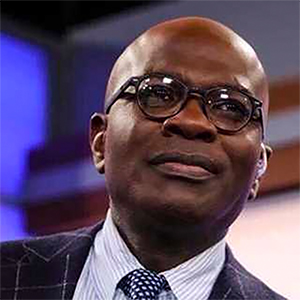
Rev. Dr. F. Willis Johnson is a spiritual entrepreneur, author, scholar-practioner whose leadership and strategies around social and racial justice issues are nationally recognized and applied.
©2026 The Fulcrum. Visit at thefulcrum.us. Distributed by Tribune Content Agency, LLC.















































Comments