Commentary: America at 250 -- Patriotic lament from her darker sons
Published in Op Eds

As the United States approaches its 250th birthday, the nation confronts a moment that should stir both celebration and sober reflection. A quarter millennium is no small achievement in the long arc of human governance. Republics have faltered far sooner.
Yet anniversaries, especially ones of this magnitude, are not merely commemorations of survival. These observances are invitations to take inventory. Thus, demanding that we ask not only what we have built, but what we have become.
The American story is told in two intertwined registers. One is triumphant: a daring rebellion reshaping political thought, expanding liberty. The other is quieter and often suppressed: a republic professing universal rights while sanctioning human bondage, preaching equality but benefiting only a select few. In our 250th year, we are invited to see these two narratives as inseparable, each shaping and challenging the other.
For those of us who inherit both America's ideals and its failures, the upcoming anniversary brings a complex sense of hope and heaviness. As a 51 year-old Black American, trained to interrogate history rather than accept it at face value, I cannot ignore the contradictions at the nation’s origins. The same parchment that boldly declared “all men are created equal” was signed in a country where my ancestors were denied their humanity. This is not an aside to the American story; it is at its center.
A century later, James Baldwin expressed the same tension, writing that he loved America more than any other country in the world and, for that reason, insisted on the right to criticize her perpetually. Their patriotism, like mine, was not sentimental but demanding. It was the patriotism of those who believe the American creed is worth holding accountable and worth redeeming.
That tension remains unresolved today. Two hundred and fifty years have not erased the color line that W.E.B. Du Bois described as the defining problem of the 20th century; the divide between Black and white Americans and the system of racial separation that governed so much of the nation's life.
If anything, this color line has proven remarkably adaptable, reappearing in the persistent segregation of schools and neighborhoods, the disproportionate incarceration of people of color, and enduring racial wealth gaps. The right to vote, once secured through the sacrifices of abolitionists and civil rights activists, has again become a contested terrain. Disinformation circulates with unprecedented speed, turning the public square into an arena where facts themselves are up for negotiation.
Such conditions tempt a nation toward two extremes: nostalgia for a mythic, unified past and fatalism that democracy is nearing its end. Both positions misread the American project. The United States has never been stable or morally settled. It is, and has always been, an argument about who belongs and what freedom requires.
To understand the significance of the 250th anniversary, we must resist the urge to see the founding as a finished achievement. The Constitution was not meant to be a monument, but a framework open to revision and debate. American progress has never come from complacency. It has advanced through the efforts of abolitionists, suffragists, labor organizers, civil rights activists, and countless citizens who refused to accept imposed boundaries.
Our democracy survives because of persistent dissent and the willingness to challenge what has come before. As we approach this milestone, the real test is not only whether the nation has endured, but whether it has learned from its past.
Learning, in this context, means telling the truth about the past without falling into cynicism or myth. It means acknowledging that the American experiment began in contradiction and required generations of struggle to align ideals with reality. Expanding democracy did not diminish the founding vision, but furthered it.
For America to thrive for another 250 years, the republic must protect the mechanisms through which citizens hold leaders accountable. The right to vote should serve as the bedrock of legitimacy, not as a tool for partisan gain. It is just as vital to confront economic inequalities that threaten the middle class and erode faith in social mobility. These responsibilities also extend beyond our borders, as the nation navigates a world where democratic norms face growing pressure.
Crucially, we must recognize that America is not a completed story, but an ongoing negotiation between aspiration and reality. The changing place of those previously excluded. Those who were denied, later contested, and are now indispensable. Revealing something central about the country itself—America's promise grows stronger only when those at its margins make their voices heard.
This is why the most honest form of patriotism may be the kind that refuses to flatter the nation into complacency. The prophets of American democracy, like Frederick Douglass, the journalist and activist Ida B. Wells, the author and essayist James Baldwin, and the civil rights leader Martin Luther King Jr., did not love the country despite its contradictions. They loved it by confronting them. Their critique was based on the conviction that the ideals set forth in 1776 make a just society possible. The 250th anniversary is not merely a birthday. It is a test.
The test is whether Americans can summon the civic imagination required to extend democracy into the next century. Can the nation move beyond the reflexive tribalism that has come to dominate political life? Can it build institutions resilient enough to withstand the pressures of misinformation and the temptation of authoritarianism? Can it cultivate a public ethic that recognizes diversity not as a threat but as a source of democratic vitality?
The answers to those questions will not be determined by commemorative speeches. They will be determined by the everyday choices of citizens, who decide whether democracy is something they practice or merely inherit.
As one of America’s darker sons, I write not to indict but to lament. The American experiment is incomplete, its history marked by both failure and renewal. Each generation inherits unfinished work. The story of our nation will not be written by those who turn away from its challenges, but by those who confront its complexities with honesty and resolve.
As we approach 250 years, let our patriotism be measured by our willingness to strive for a more just and inclusive future. This milestone is not just a time to remember, but a charge to build the America that its highest ideals promise. The next chapter depends on all of us.
____
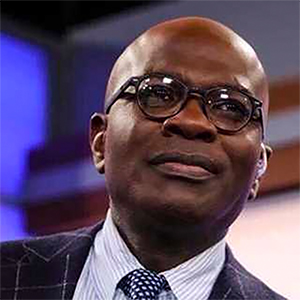
Rev. Dr. F. Willis Johnson is a spiritual entrepreneur, author, scholar-practioner whose leadership and strategies around social and racial justice issues are nationally recognized and applied.
_____
©2026 The Fulcrum. Visit at thefulcrum.us. Distributed by Tribune Content Agency, LLC.




















































Comments