Commentary: Don't let fear rewrite America's legacy of refugee resettlement
Published in Op Eds
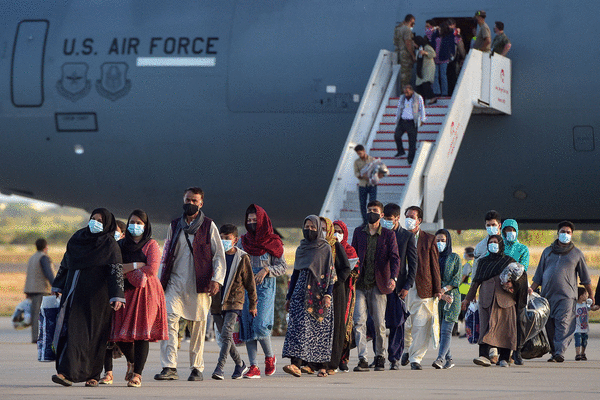
When the Taliban took Kabul in 2021, the world watched as Afghans clung to departing planes, hoping desperation might carry them to safety. We were among the lucky ones. We made it out.
At the time, I, Sediqa, held a leadership role at the International Rescue Committee (IRC), advancing women’s economic empowerment in one of the world’s most dangerous countries for women. And I, Mursal, was a university student and climate advocate whose future vanished overnight with the Taliban’s return. Because of our work and activism, as well as our Hazara identity as a persecuted ethnic and religious minority, we were granted priority evacuation.
That flight — nearly 7,000 miles to a military base in Virginia — brought safety for the two of us, but our parents and three younger siblings were left behind. Even in that moment of crisis, safety was rationed.
We were reminded of that distance again last year, when an Afghan refugee who previously worked with the U.S. military allegedly shot and killed one member of the National Guard and severely injured another in Washington. Like many Afghans in the United States, our reaction was twofold: grief for a life lost and families shattered, and fear over how quickly one horrific act could be used to cast suspicion on an entire community, undermining the fragile sense of security Afghan newcomers have worked so hard to build.
For decades, our parents risked everything so their children could get the education they were denied. They fled rural Afghanistan for Kabul in the dead of night, driven by the hope that we could grow up where school was not a privilege but a possibility.
After the Taliban returned to power, our family’s courage was met with cruelty. One of our brothers was brutally beaten. Our youngest sister was barred from attending school. Our parents eventually made the agonizing decision to flee to Pakistan, where they lived for two years without the right to work and under persistent threat of deportation back to Taliban-controlled Afghanistan.
Survival, we learned, is not safety — and escape is not freedom. From the United States, we pursued every legal pathway to reunite our family: humanitarian parole and refugee referrals. Each attempt was met with delay, denial or silence. We were safe, but not whole.
Family reunification is often treated as a humanitarian gesture, when in reality it is one of the most effective integration tools available. Families stabilize faster and recover from trauma more fully when they are not navigating prolonged separation. People who are supported and connected are less vulnerable to isolation or despair. Communities that integrate refugees successfully are not at greater security risk — in fact, they are stronger.
We did not come to America to hunker down or disappear. We wanted to move forward and chase our dreams without fear. For Sediqa, that meant continuing work in support of vulnerable women and displaced families. When the nonprofit Welcome.US launched in 2021 to mobilize Americans to welcome and support thousands of Afghan evacuees, I, Sediqa, was one of the first three employees — turning refuge into responsibility. I, Mursal, resumed my education, earning a scholarship to DePaul University in Chicago, where I am pursuing a degree in computer science.
In Afghanistan, daily life required constant vigilance. Here, we are able to plan, work and build roots in the suburban Maryland community we now call home. Those roots deepened in 2024, when five of Sediqa’s colleagues formed a sponsor group through the United States Refugee Admissions Program, bringing our family together after three years apart. Together, we are building a life we once thought was impossible.
None of this happened by accident. It was the result of innovative policy choices designed to complement government-led resettlement, accelerate integration and empower communities to play an active role. This is what refugee resettlement done right looks like. Yet opportunities like ours are vulnerable to political headwinds and are no longer available to refugees from around the world whose lives remain in limbo.
The shooting in our nation’s capital was a tragedy. It demands accountability and serious reflection. But one act of violence by a single individual does not define the Afghan people any more than the actions of one American could define this country. And when high-ranking elected officials amplify these harmful narratives, it not only lends credibility to false claims, but also shapes public attitudes and influences policy in significant and lasting ways.
If the United States wants a safe, orderly refugee system, the answer is not collective blame, but sustained investment in policies that provide security, dignity and successful integration.
America’s legacy of refugee resettlement helped save our family. The question now is whether that was an exception — or a promise.
____
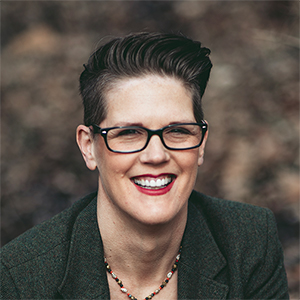
Sediqa Fahimi and Mursal Fahimi are sisters who were evacuated from Afghanistan and resettled in the United States after the fall of Kabul in 2021.
___
©2026 Chicago Tribune. Visit at chicagotribune.com. Distributed by Tribune Content Agency, LLC.





















Comments