Commentary: Women aren't too picky to date. They just don't need men to feel fulfilled
Published in Op Eds
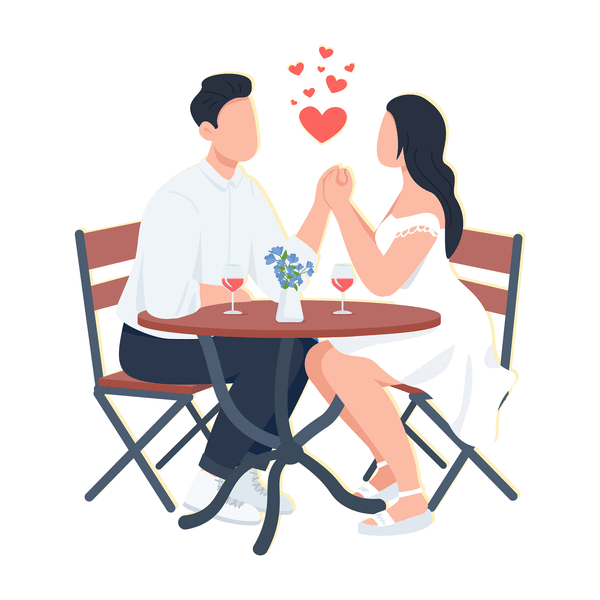
Across Los Angeles, you can feel the shift in dating without anyone saying it out loud.
Men talk about how hard it’s become to meet someone, while women talk about how peaceful life feels now on their own. The gap between those experiences is often framed as women asking for too much, but that explanation misses what’s actually changed. Women aren’t rejecting relationships. They’re rejecting connections that introduce strain into lives they’ve already established.
Los Angeles is a city built on reinvention. People come here to create something, to become something, to step into a version of themselves that feels more aligned than the one they left behind. That same instinct shows up in dating, but the baseline for relationships has shifted in ways many people haven’t fully caught up to yet.
Lately, I’ve been seeing a steady stream of commentary online suggesting that women are choosing to stay single because their standards are now higher. The narrative is simple: Women have become financially independent, emotionally self-sufficient and less willing to compromise, leaving men frustrated and relationships harder to form.
At first glance, the idea sounds plausible. But from where I stand, both personally and culturally, it feels incomplete.
I’ve lived in Los Angeles since 1999, and like many people here, I’ve spent time on dating apps, from mainstream platforms to niche, faith-based ones, trying to meet someone in a city that somehow manages to feel both crowded and disconnected at the same time. The experience started to feel less like connection and more like sorting through options. Conversations were short-lived, attention was fragmented and people became profiles to evaluate rather than individuals to understand.
Out of every 10 interactions, maybe one carried any sense of depth. Even then, maintaining that connection often felt like pushing against a current that was constantly pulling toward something easier, faster or newer. It wasn’t that people lacked interest. It was that the dating structure itself encouraged disposability.
After about a year of trying, I stepped away. I deleted the apps and decided to focus on my own life, not as a statement but as a response. I leaned into work, creativity, friendships and the kind of stability that comes from knowing who you are when no one else is defining you.
What I found was unexpected. Being single and independent didn’t feel like gaps that needed to be filled. It felt like a life that was already in motion.
I’ve been in a relationship where the connection introduced more stress than support, where emotional inconsistency turned what should have been a partnership into something that required constant management. The experience clarified something I hadn’t fully articulated before: A relationship should add to your life, not compete with your sense of peace.
Once you’ve experienced that contrast, your perspective shifts. The question is no longer “How do I make this work?” but instead “Does this make sense for the life I’ve already built?”
This is where the broader conversation misses the mark. When women say they are content being single, it is often interpreted as rejection. More often, it is discernment.
Qualities that may have once been seen as desirable extras — emotional presence, consistency, shared values — now function as minimum requirements. This isn’t about expecting perfection. It is about recognizing the cost of misalignment. When your life is stable, introducing instability carries a weight it may not have held before.
From another angle, I understand the frustration some men are expressing. The rules of engagement have shifted, but the messaging around those changes has been uneven. Many men still operate within expectations that no longer match the reality they are encountering. The result is a disconnect.
Women are being told they are too selective. Men are being told they are not enough. Both narratives flatten a more complex truth: The structure of modern dating, especially within app culture, has made meaningful connection harder to establish while simultaneously raising awareness of what meaningful connection should feel like.
In a city like L.A., where independence is often necessary just to sustain daily life, this tension becomes even more pronounced. When you are managing your own finances, your own schedule and your own sense of direction, a relationship is no longer a default milestone. It becomes a deliberate choice.
And deliberate choices come with higher thresholds.
This doesn’t mean relationships have lost their value. It means their role has evolved. Partnership is no longer primarily about survival or stability. It is about alignment.
This shift also raises the stakes of choosing the wrong relationship. In that context, women aren’t stepping away from relationships. They are stepping away from connections that fail to meet them where they are.
And in a city built on the idea of becoming, that may be one of the most honest shifts we’ve seen.
____
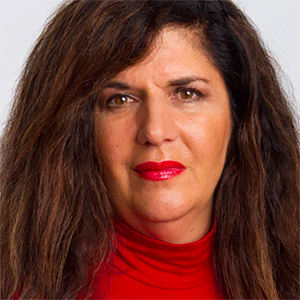
Amy Getubig is a Los Angeles-based writer focused on relationships, identity and how people navigate modern life.
©2026 Los Angeles Times. Visit at latimes.com. Distributed by Tribune Content Agency, LLC.












































Comments