Editorial: One Big, Beautiful Bill's most painful effects loom for incoming Congress
Published in Political News
Voters nationwide loudly and clearly expressed their ongoing concerns about affordability and how rising prices have put the American dream further out of reach. In flipping both the House and Senate from Republican control, they put their hopes in the hands of Democrats with a resounding mandate to act.
Trouble is, as bad as things are now, they’re about to get worse. Many of the most onerous provisions of the One Big Beautiful Bill Act — the signature legislative accomplishment of the GOP-led Congress — will take effect in the coming weeks. They promise to make healthcare more expensive and push more people out of safety-net programs.
While the incoming Congress will have plenty to do come January, reversing many of these devastating cuts and restoring access to avenues of support should be a high priority. The new majority must not allow millions of Americans to suffer when it has the power to help. Fortunately, U.S. Rep. Darren Soto and U.S. Rep. Maxwell Frost have already identified undoing those cuts as high priorities. But Congress should not wait for the new term to act.
Congress returned to Washington this week for members to complete their terms in office and put the finishing touches on one of the least-productive legislative sessions in American history. Pew Research Center analysis found that in the last 40 years, only the 118th Congress (2023-25) had passed fewer bills (106) by mid-October of its second year than the 119th’s 121.
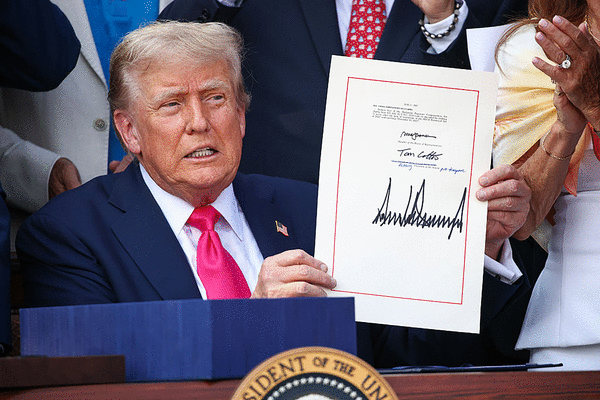
Though the bills may be few in number, they are also poor in quality — topped by the OBBBA passed by party-line votes in July 2025.
Not only did that spending bill promise to add $3.4 trillion to the deficit by 2034 — according to the Congressional Budget Office, that’s the result of a decrease in direct spending of $1.1 trillion and a decrease in revenues of $4.5 trillion — but it dramatically cut support for programs on which millions of Americans rely.
To extend the tax cuts approved by Congress during President Donald Trump’s first term, and in a failed attempt to offset the massive decline of expected revenue, the bill’s Republican authors took aim at Medicaid and enhanced subsidies for coverage under the Affordable Care Act expected to leave 11.8 million more people without health insurance by 2034, according to the CBO. New rules for the Supplemental Nutrition Assistance Program, or SNAP, ended benefits for an estimated 5 million people.
Florida leads the nation in Marketplace-plan enrollments, but data from the nonpartisan Florida Policy Institute shows that around 450,000 have lost their health insurance under the ACA since the bill took effect last year, and an estimated 1.5 million or more could lose coverage in the coming year. Complicating the issue: Earlier this month, a panel of federal appellate judges ruled that Florida had botched the administration of its rollback of COVID-area eligibility which stripped hundreds of thousands of eligibility for health-care programs.
Meanwhile, Florida’s food-stamp eligible residents will be hit by tougher enforcement rules and, starting in 2027, a funding shift that will require Florida to foot more of the cost of the program. We plan to address those changes later this month, but their impact is already being felt.
Some may argue, as the Republicans did on the campaign trail, that all of this pain is worth it for a lower tax bill and those provisions that allow Americans to keep more of what they earn. But the way those tax breaks are tilted mean only a few will enjoy the benefits while the least among us — the poor, the sick and the vulnerable — must shoulder the pain.
Democrats will take Congress in January with majorities in both chambers and a mandate to act. Yes, the filibuster complicates moving legislation through the Senate, and Trump still has the power of the veto.
But reversing the worst of these effects requires lawmakers to make every effort to help those in need, whose numbers will proliferate come Jan. 1.
_____
©2026 Orlando Sentinel. Visit at orlandosentinel.com. Distributed by Tribune Content Agency, LLC.
















































Comments