Minnesota backs full pediatric vaccine schedule, breaking with CDC
Published in Health & Fitness
MINNEAPOLIS — Minnesota is continuing to urge shots that protect children against 17 infectious diseases, despite a federal recommendation last week that cut the number to 11.
It’s rare for state health officials to break with federal vaccine guidance, but Thursday’s decision aligned Minnesota with professional medical organizations such as the American Academy of Pediatrics that continue to recommend a broader pediatric vaccine schedule.
“Changes at the federal level reflect policy and process shifts, not new scientific evidence,” said Jessica Hancock-Allen, director of the Minnesota Department of Health’s infectious disease control division. “The science is still the same, and the Minnesota Department of Health is going to follow the science.”
The Health Department’s decision was immediately backed by the Minnesota Medical Association, the state’s largest advocacy group for doctors, as well as groups representing the state’s pediatricians, family doctors and obstetricians.
State and federal health leaders historically have been in lockstep on vaccine recommendations, but that changed last year with President Donald Trump’s appointment of Robert F. Kennedy Jr. as the nation’s health secretary. Kennedy has long disagreed with doctor groups and the balance of medical research about the safety profile and side effect risks of some vaccines and urged the nation to limit its vaccination recommendations to the most necessary immunizations.
Last week, he said the new CDC recommendation “protects children, respects families, and rebuilds trust in public health” and aligns the U.S. with other developed nations that also have more conservative pediatric vaccine schedules.
The state and federal recommendations agree on immunizations against diphtheria, tetanus, pertussis (whooping cough), Haemophilus influenzae type b, pneumococcal disease, polio, measles, mumps, rubella, human papillomavirus (HPV) and varicella (chicken pox).
All 11 remain on Minnesota’s K-12 vaccine schedule, meaning that parents will need to seek shots against the infectious diseases when they’re recommended for their children or file written exemptions.
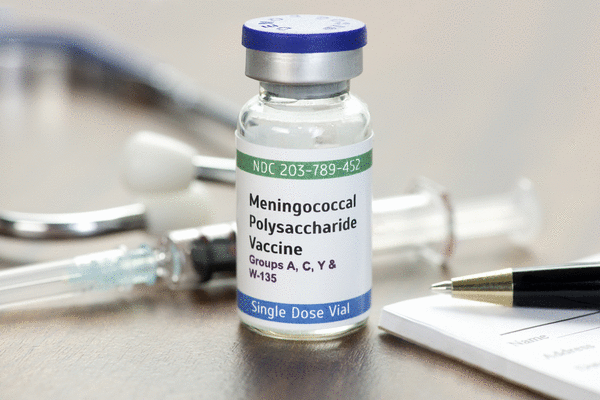
However, the federal schedule cuts recommended HPV vaccine doses from two to one and recommends that parents decide in consultation with doctors whether to immunize children against rotavirus, COVID-19, influenza, meningococcal disease, hepatitis A and hepatitis B.
Minnesota continues to recommend routine immunization against all six of those diseases and requires shots to protect against hepatitis B and most forms of meningococcal disease before children can attend school. The state school immunization schedule applies whether children attend public, private or online schools.
Hancock-Allen said she is hopeful that agreement between Minnesota and leading medical organizations will reduce the confusion among parents that has resulted in declining pediatric vaccination rates. Minnesota once had one of the highest measles vaccination rates among children entering school in the nation, but now its rate is among the lowest. The 26 measles cases in Minnesota last year tied for the third-highest annual total in decades.
“We have all this confusion in the vaccine guidance space,” Hancock-Allen said, “and confusion sows doubt by its very nature.”
Hancock-Allen said a conservative vaccine schedule isn’t going to be as effective in the U.S. as it is in other nations such as Denmark, where universal health care ensures medical access and longer parental leaves reduce the likelihood of infants suffering infections in child care facilities.
________
©2026 The Minnesota Star Tribune. Visit at startribune.com. Distributed by Tribune Content Agency, LLC.





Comments