Editorial: Illinois' universities graduate a workforce that still sets the state apart
Published in Op Eds
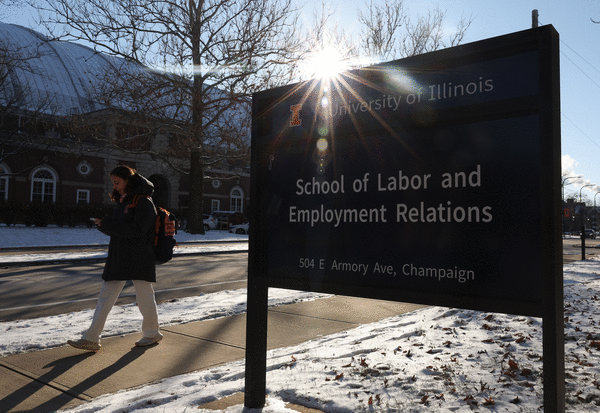
Even if you didn’t go to college in Illinois, odds are you’ve benefited from someone who got a degree from one of our universities.
Maybe your Northwestern cardiologist helped you get back on your feet. Or a University of Illinois-trained engineer built the bridge you cross every day to get to work. Or a union electrician who got your lights back on after an outage.
From Champaign to Carbondale to right here in Chicago, Illinois is home to some of the finest universities in the country, which produce an educated and highly qualified workforce. We were pleased to see Illinois receive national recognition on that front. Site Selection magazine recently named Illinois No. 1 in the Midwest and No. 3 nationwide for workforce development, citing the strength of its education, training and talent pipeline.
That ranking only reaffirms what we and many others in Illinois long have known. There are many reasons in recent history for Illinois’ economic struggles, but the quality of our workforce hasn’t been and isn’t one of them.
This recognition points to Illinois as one of the nation’s strongest states for producing job-ready workers. As regions across the country struggle to align education with workforce needs, Chicago’s higher-education institutions continue to anchor growth, attract employers and give the city a durable competitive advantage worth recognizing — and protecting.
The state performs well because it combines world-class research universities with a large network of community colleges and training programs that prepare people for real jobs. Illinois’ universities don’t just educate talent, they help generate the industries that hire it. And while talent may not solve every challenge Illinois faces, it remains one of the state’s most durable and renewable assets.
Still, talent alone cannot produce growth if the broader economic environment discourages investment or drives workers elsewhere.
That workforce advantage cannot be cultivated and fully leveraged without an economic climate that drives investment and creates the kinds of job opportunities that entice highly educated and trained people to stay for the long haul. Illinois has shown modest signs of recent job growth, and the state’s economy also posted solid growth in 2025 — a welcome change after years in which Illinois lagged behind neighboring states and the nation.
That historic record reflects, in large part, the state’s long-running fiscal struggles and debt burden.
“Illinois’ fiscal policies significantly influence economic growth and employment in the state,” as the Civic Federation wrote in a January 2025 report. Meaning, as long as Illinois lawmakers fail to address the state’s ongoing financial troubles and the uncertainty surrounding potential future tax hikes remains, it’s hard for businesses to feel comfortable investing here.
That’s a disservice to our well-trained workforce. Politicians in Springfield would do well to preserve and nurture an economy worthy of the talent Illinois’ universities continue to produce.
_____
©2026 Chicago Tribune. Visit chicagotribune.com. Distributed by Tribune Content Agency, LLC.




















































Comments