The surge of women elected in the 2026 midterms, particularly women of color, will shape political engagement for a generation of young people
Published in Political News
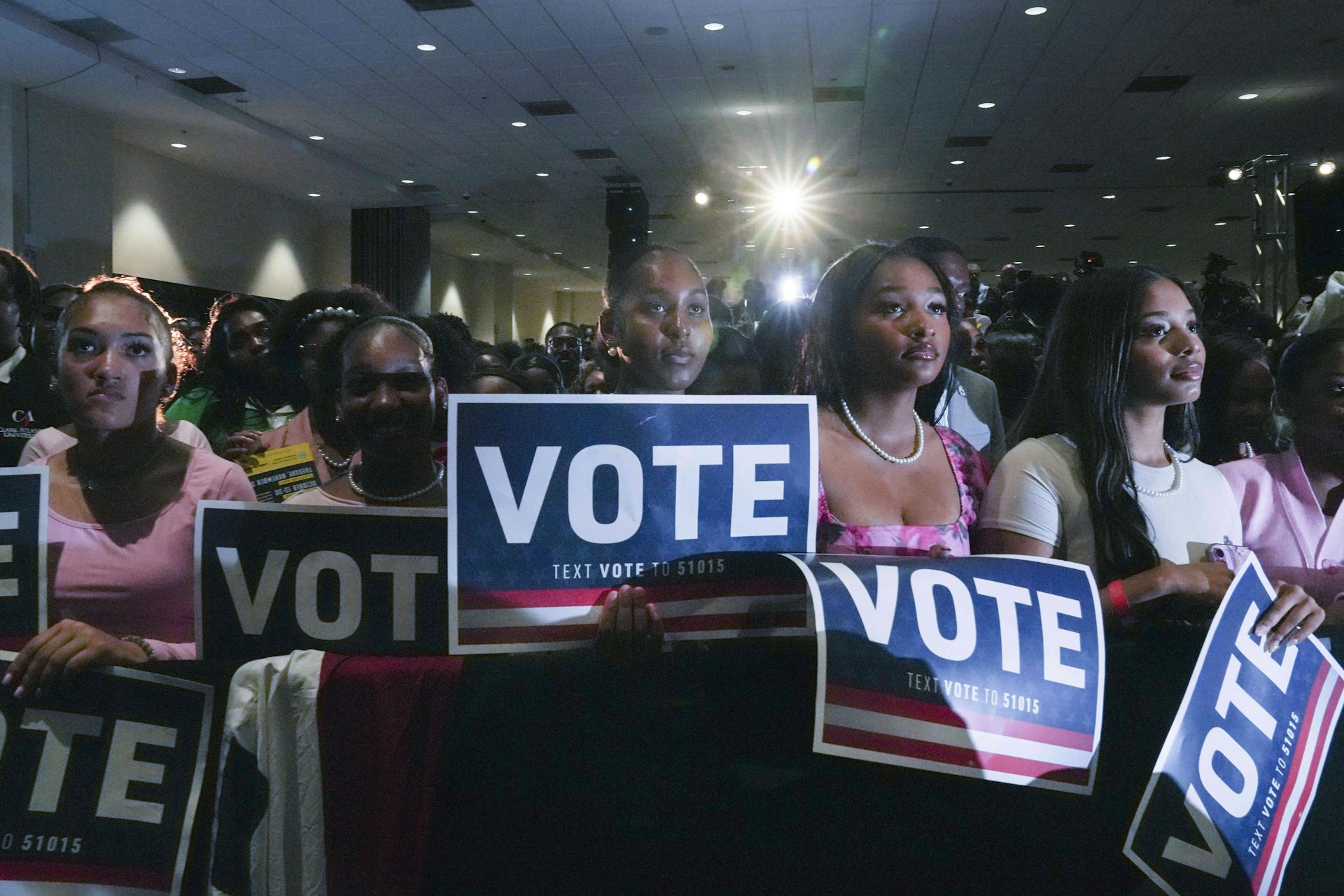
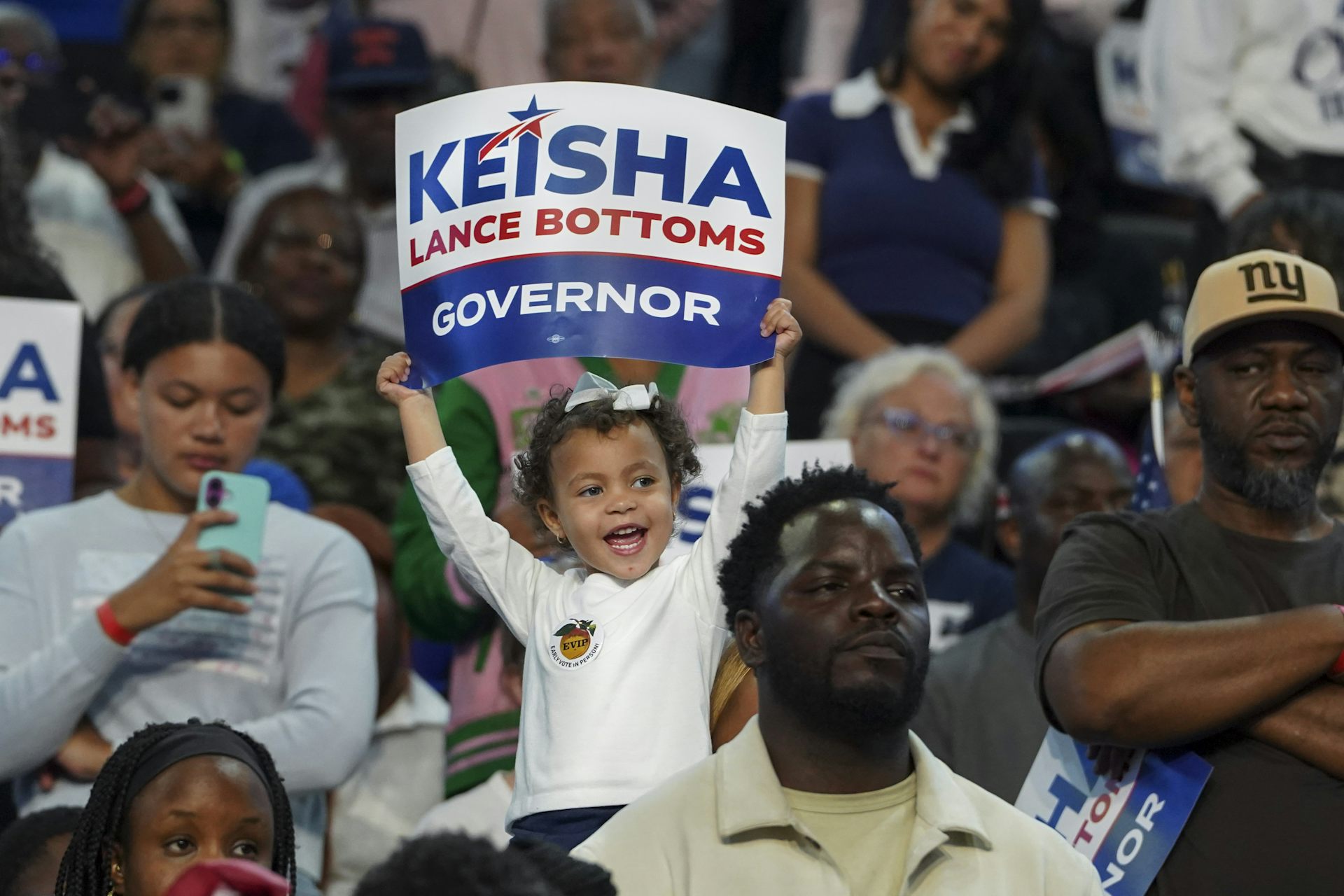


On the day after the 2026 midterms, Atlanta’s WSB-TV led off its coverage by showing a series of almost entirely white men get replaced, one by one, by Black women.
Not only had Georgia elected Keisha Lance Bottoms as the nation’s first Black woman governor, African American women had also won positions as secretary of state, attorney general, state school superintendent, agriculture commissioner, insurance commissioner and labor commissioner.
In the legislative branch, Georgia’s likely incoming speaker of the House of Representatives is also a Black woman. Reporter Candace McEwen, herself a Black woman, ended her report by recounting how her 9-year-old goddaughter, upon seeing the graphic showing all the new Black women leaders in Georgia, commented, “I might have a shot!”
As McEwen concluded: “Indeed she does.”
As political scientists who have long studied the effects of women politicians, our research has shown that both McEwen and her young goddaughter are right: When young people see politicians who look like them, they are inspired to be politically engaged.
Following the 2026 midterm elections, a record number of women will serve in state and national offices. More women of color will serve in prominent political offices than ever before.
As of this writing — with some races yet to be called — at least 162 women will serve in the U.S. Congress, 138 of them in the House of Representatives, according to the Center for American Women and Politics.
A minimum of 18 women will serve as governors, while 108 will serve in other statewide executive offices. The new Congress will seat an unprecedented 31 Black, 29 Hispanic, nine Asian American/Pacific Islander and four Native American women, and three women of Middle Eastern heritage.
These women of color will no doubt have significant effects on public policy as they draw on their life experiences while governing. In addition, our research shows that they will have another kind of impact on young people in their states and districts. Specifically, when women run for office, they motivate young girls to get involved in politics.
Women of color, however, are especially inspiring for young girls. Not surprisingly, they serve as role models for young girls of color, igniting their political interest and even leading them to envision themselves as running for office one day.
But their impact also extends to white girls, who are inspired by seeing these women overcome the double barriers of gender and race. This inspiration while young leads to greater political participation in adulthood.
There’s the concrete connection: Inspiration now, participation later.
While teenagers typically do not spend a lot of time following politics, they often absorb lessons from their political environment by osmosis, such as a news story shared on social media, passing by a billboard or holding a conversation with a parent or teacher. Because politics has historically been a man’s game – and a white man’s game at that – seeing women, and women of color especially, in public life changes their default assumption about who is suited to govern.
Politics is no longer just for white men. In the famous words of civil and children’s rights advocate Marian Wright Edelman, you can’t be what you can’t see. When young women see women in positions of leadership, they believe they can be leaders too.
If we left the story here, the election of all these women of color may seem like an unmitigated win for the long-term vitality of American democracy. But the story is a little more complicated.
The historic wave of women is a win for the future of the Democrats specifically. This is because the overwhelming majority of these newly elected women are Democrats.
Of the 162 women who have officially won their midterm House or Senate races so far, 122 – 75% – of them are Democrats. That’s a stunning party imbalance.
There is an even greater imbalance for women of color. In Georgia, all the African American women elected to statewide office are Democrats. In the U.S. House, all but four of the women of color are Democrats; in the Senate, it’s 100%.
This matters because we have also found that young people are most likely to see candidates from their own party as role models.
Lest you doubt that we can speak of teenagers as Democrats or Republicans, study after study finds that party attachments develop young, and the same polarization found among adults is mirrored in their children.
In other words, the girls who are inspired by this wave of women are far more likely to be Democrats than Republicans. Since partisan teens usually grow up to be partisan adults, this suggests that future Democratic women – whether they be racial minorities or whites – will be more politically engaged in adulthood.
For all the attention paid to the political choices of young Republican men, the party should be worried about the future of Republican women. Without more women politicians representing the GOP, Republican girls are likely to continue seeing politics as a man’s game and stay on the sidelines of civic life.
This doesn’t mean this wave of mostly Democratic women politicians won’t have any impact on Republican teens.
When women of either party run for office, both Republican girls and boys change their attitudes about women.
In general, Republican teens are less likely than Democrats to think that women have the necessary traits to be political leaders. But when they live in a community where women candidates run, they come to see women as fit to govern.
Why the change among Republicans and not Democrats? To be blunt, it is because Democratic kids do not need to be convinced that women are as capable of leadership as men.
Representation matters. We have found that barrier-breakers and firsts are particularly effective in changing young people’s beliefs and behaviors. The 2026 midterm elections produced many of those.
We expect that the effects will play out for years to come as more women believe that in politics, they have a shot.
This article is republished from The Conversation, a nonprofit, independent news organization bringing you facts and trustworthy analysis to help you make sense of our complex world. It was written by: David Campbell, University of Notre Dame and Christina Wolbrecht, University of Notre Dame
Read more:
Georgia Gov.‑elect Keisha Lance Bottoms stands on the shoulders of Stacey Abrams, Charlotta Bass and countless other Black women who dreamed
The stunning transformation of the Southern Democratic Party, in one lifetime
Women are still underrepresented in local government, despite a woman running for president
The authors do not work for, consult, own shares in or receive funding from any company or organization that would benefit from this article, and have disclosed no relevant affiliations beyond their academic appointment.














































Comments