How souvenir penny presses could survive after the end of the one-cent coin
Published in Lifestyles
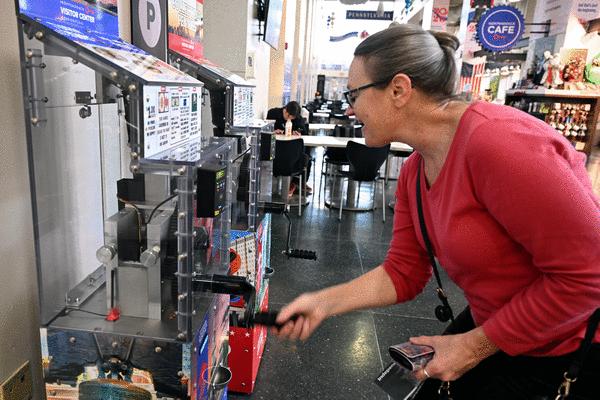
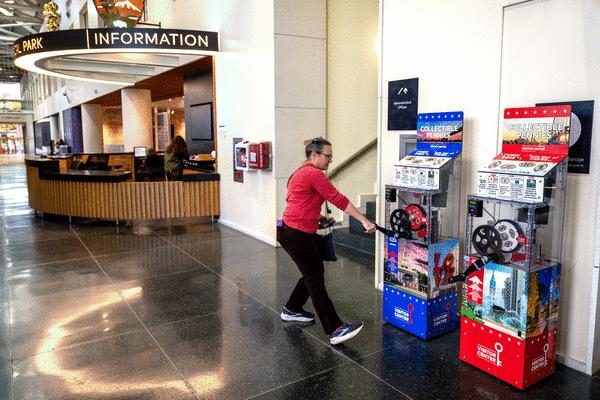


PHILADELPHIA — A wheel cranks on the machine at the Independence Visitor Center, slowing with every turn until: CLINK! A reward drops out the bottom waiting to be collected.
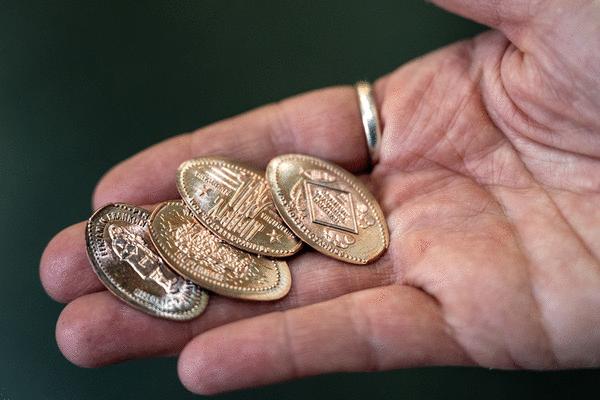
It’s a familiar, elongated penny. In its new form, Honest Abe’s head is swapped for an illustration of Rocky — naturally.
Philadelphia — along with other cities with tourist draws nationwide — is peppered with old-school penny press machines, allowing visitors to mark a noteworthy trip with an inexpensive souvenir. It’s a tried-and-true practice that could be in peril now that the U.S. Treasury has ended penny production.
After a 232-year run, the government announced it was ending penny production because of its eroded value and the rise of digital payment systems. A final batch was struck recently at the Philadelphia Mint.
Dating back more than a century, penny press machines can be found in museums, at visitor centers, at zoos, and on boardwalks, usually costing only a dollar for a kitschy souvenir. The first elongated souvenir coins in the United States date to the 1893 World’s Columbian Exposition, with four designs to commemorate the event.
Old City’s Independence Visitor Center and a handful of other historic locations across town continue to offer machines to press those pennies into something new and beautiful.
The machines are a hit because they’re “interactive, iconic, and adaptable” with different settings, visitor center spokesperson Maita Soukup said. “We are hopeful the coin press will continue bringing joy and cranking out travel memories in this new post-penny world,” she said.
The visitor center has two machines and eight designs, including Rocky, the LOVE sculpture, Ben Franklin, and the Liberty Bell.
Ali Furmall stopped by on a recent weekday afternoon while visiting Philly from Spokane, Washington. She and her husband casually collect the pennies when they travel. She opted for a design with the logo of Reading Terminal Market, one of her favorite destinations during their stay.
“I have a couple of pennies with national park themes that I like a lot,” she said. “I generally prefer iconic landscapes or landforms.”
As for the discontinuation of penny production, Furmall shook off any concerns.
“I’m not sure that pennies are so necessary for commerce,” she said. “So these machines might become the primary way they’re used.”
Enthusiasts say they do not expect penny pressing to end entirely — just for it to change.
“The future of penny presses is just getting started,” said Albert Guerrero. Alongside his wife, Amy, he co-owns Pennybandz, a pressed penny company that sells machines as well as accessories — like wearables and journals — to hold pressed pennies. “We truly believe the retirement of the penny won’t mark the end of pressed coins.”
Stu Hockstein, the administrator behind PennyPresses.net — a website for pressed penny collectors and lovers that documents all things related to the elongated coins — tends to agree. His website includes a map documenting more than 3,300 machines nationwide along with features like a Penny Pals trading service.
In Philly, some of the machine locations mentioned on the PennyPresses.net map include the Philadelphia Zoo, the Betsy Ross House, and the Franklin Institute.
Hockstein says the eventual elimination of penny production was inevitable, citing the coins’ high cost to mint.
“Well, it finally happened,” he said. As for how it affects the future of penny machines, he says it’s twofold.
First off, it will take quite some time for pennies to go away entirely.
“It will take 20 to 30 years for pennies to be removed from circulation,” Hockstein said. “But more importantly, the pressed penny machine manufacturers have been moving away from a business model that involves the customer placing their own pennies in the machines.”
Over the years, modern penny press machines have started coming pre-loaded with their own pennies or blanks (called slugs), and accepting paper bills, credit cards, or tap-to-pay. That means no more fishing around the bottom of your purse for a penny covered in lint.
You can see examples of those machines at the very place where the U.S. Mint started (back in 1793) and ended making pennies recently. The mint’s gift shop includes a pressed penny machine with four designs and provided pennies. It costs a dollar.
Guerrero, of PennyBandz, says that while almost 300 billion actual pennies are still in circulation, the change will give companies like his time to upgrade the quality of and access to blanks. Right now, coin-operated machines that require a penny cost businesses less than ones with upgraded tech that can accept a dollar bill or credit card.
“When that time eventually comes, we’re already prepared to offer beautiful copper blanks that press just as well, if not better, and give that same satisfying collectible experience,” he said.
As older penny press machines fall into disrepair, Hockstein says, they will likely be replaced with newer models that include blanks. In short: “Although pennies may eventually be going away, the hobby is here to stay.”
And you know what they say: Every penny counts.
©2025 The Philadelphia Inquirer, LLC. Visit at inquirer.com. Distributed by Tribune Content Agency, LLC.






















Comments