Pets in homeless shelters? Allowing them can preserve 'a life-saving bond'
Published in Lifestyles
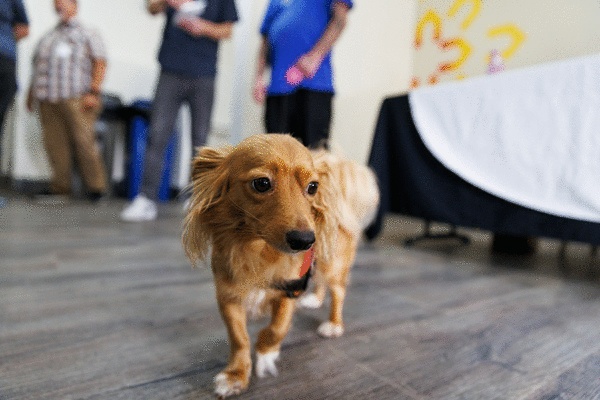
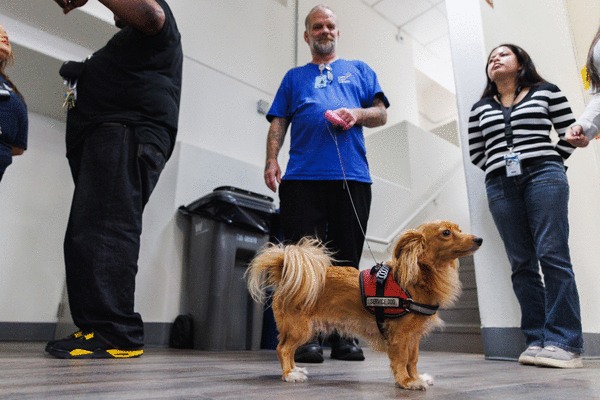
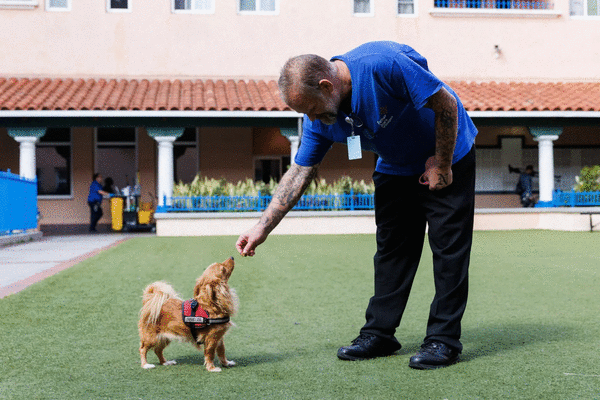





SAN DIEGO — Babygirl, a young dachshund and chihuahua mix with long, golden hair, became homeless during the pandemic. So did her owner, and he searched far and wide for a shelter that would take the two of them.
Yet many programs in San Diego County only accepted humans.
“That was my deal breaker,” said Benjamin Noss, Babygirl’s 51-year-old owner. Sleeping in parks already filled Noss with despair. Why would he give up his one source of unconditional love?
Today, he and Babygirl stay at a shelter run by Father Joe’s Villages. The nonprofit has long allowed animals, and earlier this month Noss was one of several speakers to address dozens of people from around the United States who visited the group’s San Diego headquarters to learn how to create their own pet-friendly facilities. The event was co-hosted by My Dog Is My Home, an organization that advises shelters on how to better welcome in dogs and cats.
“It’s a life-saving bond,” said Christine Kim, the nonprofit’s founder and executive director. Losing that connection might worsen an already traumatic situation, she added. “We were asking them to make a really impossible decision.”
Jesse Casement, Father Joe’s chief client services officer, said she knew of people living outside who’d decided not to kill themselves because they didn’t want to abandon their dogs.
At the moment, Father Joe’s has two short hair cats, one bearded dragon (it’s a lizard), as well as Huskies, pit bulls and chihuahuas. All told, there are 38 animals spread throughout several shelters. Wait, no, there are 41: Babygirl just gave birth to puppies.
Letting animals bunk in with people obviously introduces challenges. Where do they bathe? Where do they poop? Who watches them while their owner’s pooping? California law includes some protections for service and emotional support animals — the state’s civil rights office once fined the San Diego Rescue Mission for allegedly blocking a man’s emotional support cat — but shelters have more leeway when it comes to regular pets.
Still, many San Diego facilities open their doors to most animals. That includes the Rescue Mission’s South County Lighthouse in National City.
Father Joe’s began allowing pets in 2020. With the help of a state grant, leaders created washing stations and potty areas while also buying leashes, crates and food tubs. People can sign up to babysit each other’s animals, and staff are trained on how to act around creatures that were recently living outside.
The nonprofit does set limits. Emotional support roosters? A-OK. Pet horse? Hard pass. Father Joe’s doesn’t allow more than 10% of households in a given program to come with pets, although Casement said they’d never hit that limit. In 2022, their shelters held 112 animals, a six-year high, but the numbers have since gone down. Last year, they helped house 83.
Babygirl has now been certified as a service dog, and she wore a vest recently as she sniffed at visitors, her tail wagging. Noss said he was close to finishing a culinary program at Father Joe’s and looked forward to applying for jobs.
“For people that are homeless, it’s scary to be out, it’s really scary,” Noss told the crowd. “It’s hard to find places, and then reaching out and being told ‘no’ all the time, it discourages people.”
“The more opportunities you give us, the more people that are going to accept them.”
©2026 The San Diego Union-Tribune. Visit sandiegouniontribune.com. Distributed by Tribune Content Agency, LLC.























Comments