Gen Z is putting down phones and returning to movie theaters
Published in Lifestyles




MINNEAPOLIS — Conventional wisdom is that members of Gen Z are on their phones 24-7. But once or twice a week, Abraham Teuber can’t wait to put his down.
That’s when Teuber — who, at 25, is near the upper end of the 14-29 age range of Gen Z — goes to the movies. And the Minneapolis resident is in good company. Hollywood executives worried that his demographic permanently shifted to streaming content during the COVID-19 pandemic.
Instead, Zers are leading moviegoers back into theaters.
“This is an audience we thought would be lost to the small screen and to social media and other technology. We thought that they may shun the very analog experience of watching a movie on the big screen,” said Paul Dergarabedian, a box office analyst for several decades with the media company Comscore.
Instead, Gen Z is buying up a higher percentage of movie tickets, rising from 34% of the overall box office in 2019 to 39% last year, Dergarabedian said. Like Teuber, most of the Zers, aka Zoomers, are turning off their phones for the duration of the film — and, possibly, turning them back on afterward to post reviews on apps such as Instagram or Letterboxd.
That’s exactly what happened last year with “A Minecraft Movie.” Despite poor reviews, it became a billion-dollar hit, in part because its “chicken jockey” scene went viral on social media, becoming something you had to see in theaters to be in on.
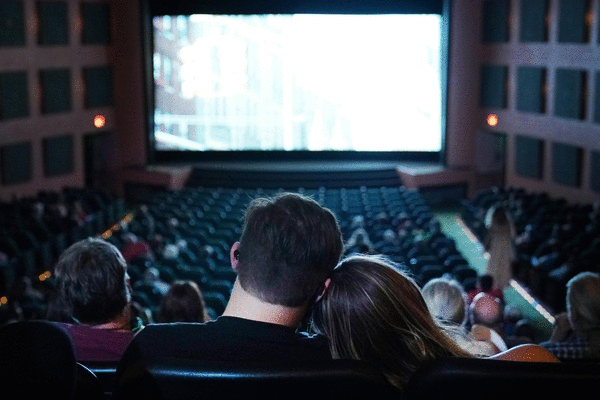
“What’s driving a lot of this, ironically, is social media. A medium that is very small screen-centric and digital is becoming a huge influence in powering this age group to going out,” said Dergarabedian. “They are going to theaters to have a tactical, immersive, communal experience.”
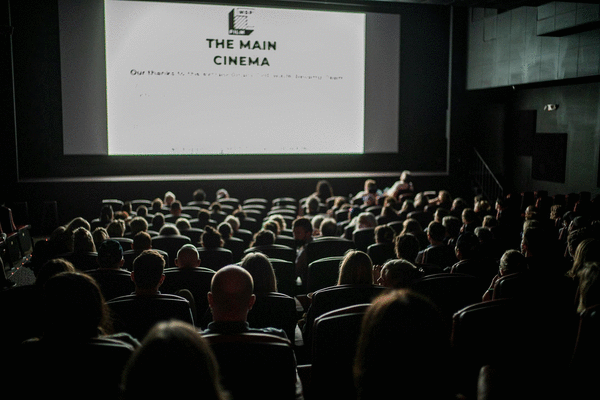
Andy Windels, manager at the Main Cinema in Minneapolis, says crowds there back that up. Windels has noticed that older moviegoers seem more reluctant to return to theaters, but frequent sold-out showings in recent months represent a “big improvement” year-to-year.
“People were getting sick of going between home and work,” said the 27-year-old Windels. “And you can go with your friends. Discussing film and loving film, I think, has been a real draw since COVID, in a different type of place where there aren’t any other obligations.”
Global box office figures back that up. The $8.6 billion worldwide grosses in 2025 were the second-best since the box office cratered in 2020.
Jesse Bishop programs movies for the Main, where at least one of five screens is often playing a title from Zoomer favorite A24 Films, the company that released hits including “Marty Supreme” and “Everything Everywhere All at Once.” He agreed that the pandemic is a big piece of the puzzle. Especially since the University of Minnesota campus, located a mile and a half from the Main, provides a steady stream of new customers in that age group.
“Gen Z was trapped at home for that whole period when they were young. And I think in general, it’s the young people who tend to want to be not cooped up at home now. So it makes sense that they’re finding refuge in going to the movies,” Bishop said.
Selma Erickson, 27, finds that refuge two or three times a week. Erickson, who jokes that she’s “committing highway robbery against AMC” theaters by using her $25-a-month loyalty card so often, said, “I really, really like the collective experience of doing something with all these strangers.”
The phenomenon of Zoomers re-embracing theaters has parallels in other analog re-discoveries.
“Look at vinyl albums. There’s a huge boom. DVDs and other physical media are becoming more popular with Gen Z as well. They’re digital natives, but they’re becoming analog fanatics,” Dergarabedian said. “During those two hours, you’re not on your phone. You’re literally unplugged from technology, unless you’re kind of rude.”
Recapturing attention spans
Windels thinks unplugging is not just a part of going to the movies, but a deliberate choice among his peers: a one-screen experience in an increasingly two-screen world.
“This generation has grown up with screens in their hands their whole lives and now they’re trying to recapture their attention spans,” said Windels. “I think people are consciously trying not to second-screen watch, like with Netflix at home. They’re trying to give their whole attention to it and movie theaters are a great place to experience that.”
Teuber concurred. He values “the social contract of a movie theater, which is that you’re not going to go on your phone, you’re not going to be loud, you’re all paying attention and then you’re all experiencing someone else’s perspective.”
Beyond putting away his phone and eschewing streaming (he doesn’t subscribe to any streaming services), Teuber says going to independent cinemas and participating in things like post-screening Q&As offers an additional degree of engagement with movies, a human one that skips the algorithms used by streaming apps to influence us.
He’s compelled by curated films and film events because they “are always, always going to be worth more of anyone’s time than whatever the algorithm is serving up on the homepage of HBO Max or Netflix or Hulu. I’m so much more interested in having a singular experience that an individual thinks is worth my time.”
Hollywood experts have fretted for years that stars no longer guarantee an audience for their movies. Windels believes actors such as Emma Stone and Timothée Chalamet do have loyal followings but thinks informed fans like Teuber “have shifted a little to more behind-the-scenes stuff, the director or the studio. People are putting their trust more in the creative minds behind a movie.”
As the audience shifts, so does programming. In addition to A24 films, Bishop said the Main had an outsized hit with Stone’s “Bugonia,” which sold out screenings for more than three weeks, and “The Secret Agent” (both films were nominated for Oscar’s best picture trophy). While older Zoomers are enjoying “Wuthering Heights,” Dergarabedian noted that the younger side of Gen Z accounts for PG movies being more successful than PG-13 movies — for the first time ever — in 2024, and again in 2025.
“‘Zootopia 2′ was PG, ‘Wicked 2′ was PG. In fact, the highest grossing movie last year, ‘Lilo and Stitch’ was PG," Dergarabedian said. “It used to be that it wasn’t cool for a Gen Z person to go to a PG movie, but now there are so many good ones.”
After their brief, post-pandemic panic, experts say it’s become clear that streaming movies are merely the latest in a series of supposed threats to moviegoing: the Great Depression, the advent of television and the revolution in home video were all perceived as potential fatal blows for the movies. In each case, Hollywood survived.
“This shift is generationally important, because the Gen Z moviegoers of today are the parents of tomorrow. That’s how I got interested in the movies back in the ’60s — going with my mom and dad," Dergarabedian said.
In fact, if you take away technologies such as IMAX or Dolby sound, moviegoing has remained pretty much the same since the 1930s — and it’ll continue, film experts suggest, into the 2030s and beyond.
©2026 The Minnesota Star Tribune. Visit at startribune.com. Distributed by Tribune Content Agency, LLC.





















Comments